
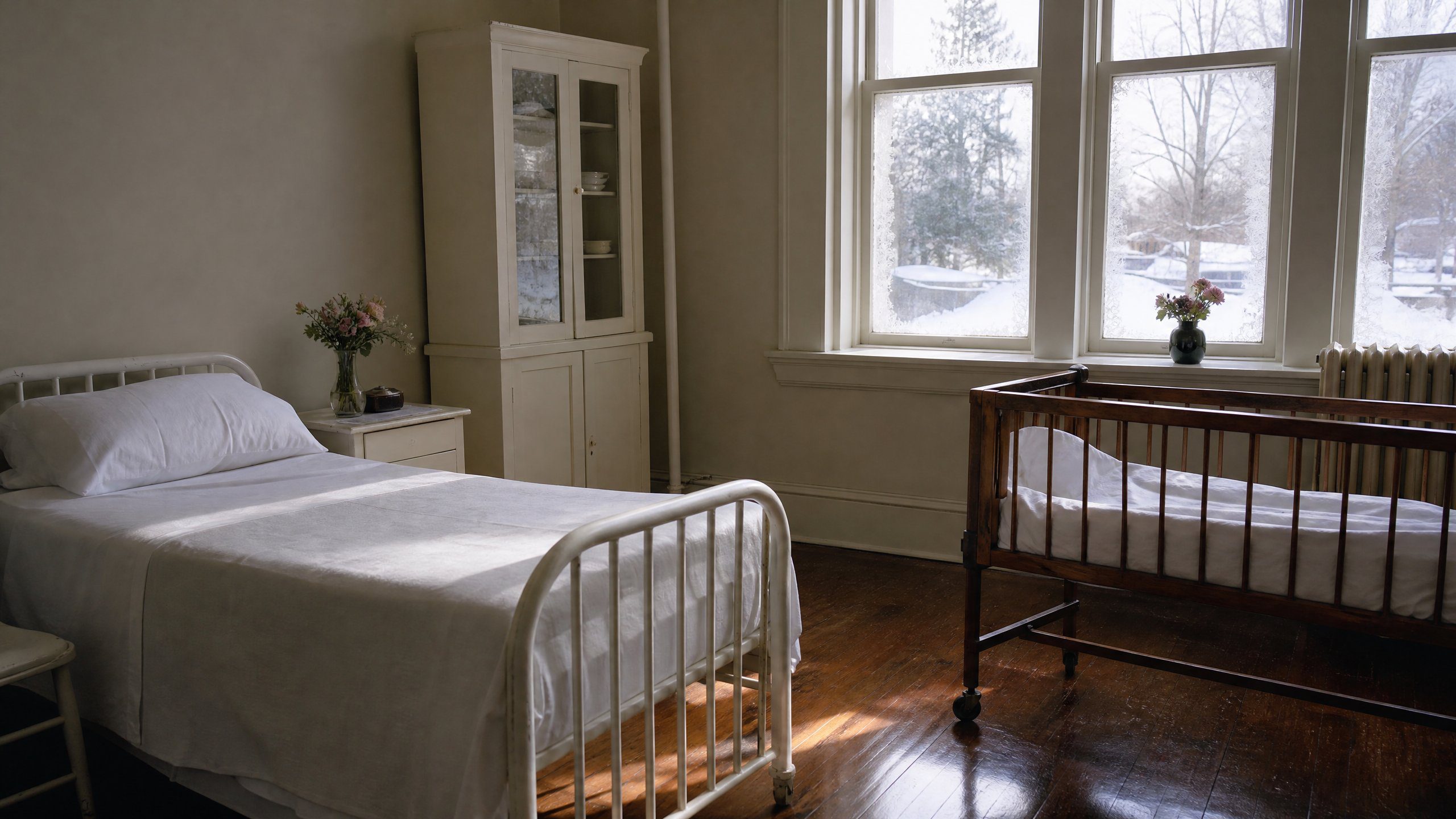
On January 19, 1943, a Dutch princess was born in an Ottawa hospital room that the Canadian government had declared, for the length of the birth, to be outside Canadian law.
The baby was Princess Margriet, the third daughter of Princess Juliana, heir to the Dutch throne, who had taken refuge in Canada after Germany invaded the Netherlands in 1940. Under the law of the time, anyone born on Canadian soil became a British subject. To make sure the child held only Dutch nationality and kept her place in the line of succession, Canada issued a proclamation making the place of her birth extraterritorial.
Margriet was born at the Ottawa Civic Hospital, and the Dutch flag flew from the Peace Tower on Parliament Hill to mark the birth. After the war Juliana sent Ottawa 100,000 tulip bulbs in thanks for sheltering her family and for Canada’s part in liberating the Netherlands, and the Dutch royal family has sent tulips every year since.
The birth and the tulips
| Born | January 19, 1943 |
|---|---|
| Hospital | Ottawa Civic Hospital |
| Proclamation | November 27, 1942 |
| Published | Canada Gazette, December 26, 1942 |
| First tulip gift | 100,000 bulbs, 1945 |
| First festival | 1953 |
Why was Princess Margriet born in Canada?
Germany invaded the Netherlands on May 10, 1940, and within weeks Juliana, the daughter and heir of Queen Wilhelmina, sailed for Canada with her two young daughters, Beatrix and Irene, aboard the Dutch ship Sumatra. They landed at Halifax on June 11, 1940, while her husband, Prince Bernhard, stayed behind in London. Canada’s governor general, the Earl of Athlone, had offered them asylum.
Read next
Bom Jesus: The 1533 Treasure Ship Inside a Namibian Diamond Mine
The Proclamation of November 27, 1942
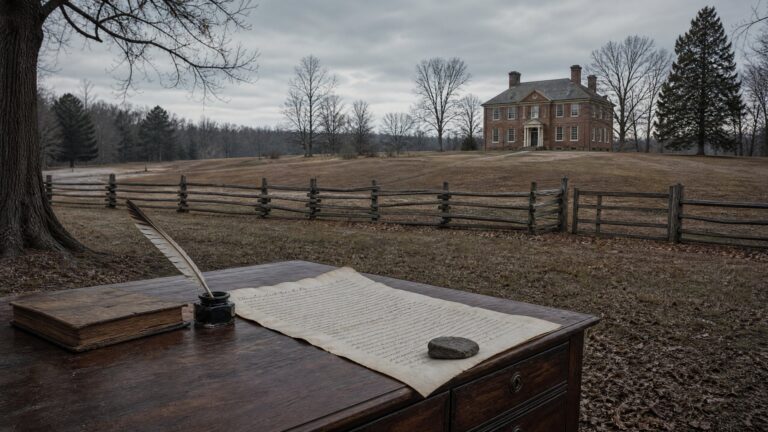
A child born in Canada would have been a British subject from birth, which was a problem for a baby who might one day stand in the Dutch line of succession. Canada’s government settled it with a proclamation issued in the name of King George VI on November 27, 1942. It was made under the War Measures Act, signed for the King by the Earl of Athlone as governor general, and published in the Canada Gazette on December 26, 1942.
The proclamation that settled the matter never named a hospital or a date. It declared that “any place in Canada within which Her Royal Highness the Princess Juliana of the Netherlands may be confined” would be extraterritorial during the birth, limited to the space actually in use for it. Juliana and any child born there were given immunity from criminal, civil and military jurisdiction, federal or provincial.
A written statement from an official member of Juliana’s household, saying a place was being used or had been used for the birth, was to be accepted as conclusive proof by any Canadian court.
Newspapers at the time reported that a room in Ottawa had become Dutch territory, and the story has been repeated ever since. The proclamation itself made the birthplace extraterritorial, outside Canadian jurisdiction for the duration of the birth, and handed no Canadian ground to the Netherlands.
A Seven-Pound Princess at the Civic Hospital
Juliana was admitted to the Ottawa Civic Hospital on January 18, 1943, and given a suite on the third floor overlooking Holland Avenue. Margriet was born there the next day, in a room the proclamation had placed outside Canadian jurisdiction for as long as it was in use. Prince Bernhard flew to Ottawa, and that evening a press statement announced that mother and daughter were well.

The baby was named after the marguerite, a daisy-like flower that had become a symbol of the Dutch resistance. Juliana said that her baby would always be a link with Canada, for her own family and for the Netherlands.
To celebrate, the Dutch tricolor was raised on the Peace Tower, the clock tower of Canada’s Parliament, and the tower’s carillon played the Dutch national anthem and other Dutch songs. It was the first time a foreign flag had flown from the tower.
A Baptism Broadcast to the Occupied Netherlands
Margriet was baptized at St Andrew’s Presbyterian Church on Wellington Street in Ottawa on June 29, 1943. A Dutch naval chaplain, the Reverend Winfield Burggraaff, led the service in Dutch, and it was broadcast live by shortwave radio to London and relayed from there to the occupied Netherlands. Her grandmother, Queen Wilhelmina, came to Ottawa for it, and the Canadian prime minister, William Lyon Mackenzie King, was in the church.
Her godparents included President Franklin D. Roosevelt of the United States and the Dutch merchant navy, chosen to honor the sailors’ part in the war. The family stayed in Ottawa until the Netherlands was liberated in 1945, a liberation in which the Canadian Army played a leading part.
The Tulips Sent Back to Ottawa
Juliana returned home in 1945 and that fall sent 100,000 tulip bulbs to Ottawa as a token of gratitude. She followed them with 20,500 more the next year, and the Netherlands still sends 20,000 bulbs a year, half of them from the royal family.
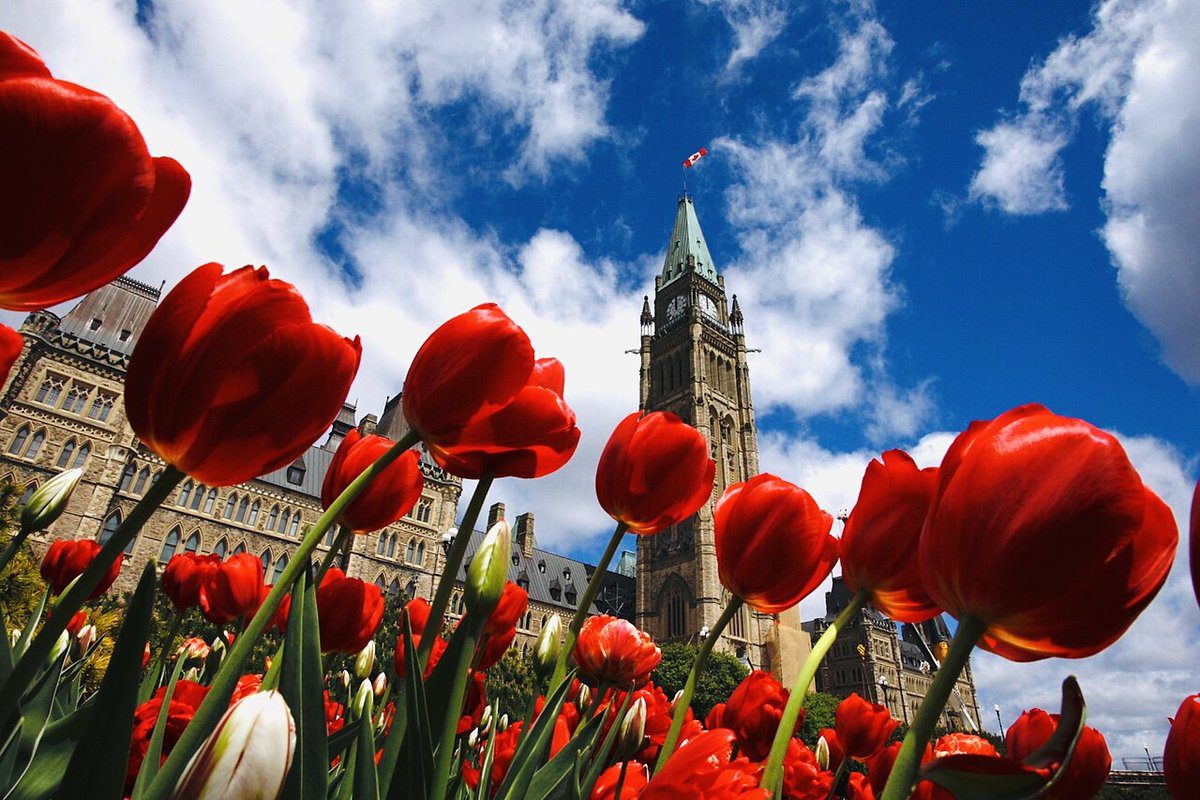
The gifts led to the first Canadian Tulip Festival in 1953. The Ottawa Board of Trade organized it, and the photographer Malak Karsh, who had suggested the idea, is counted as its founder. The festival was set up in recognition of the Canadian Army’s part in the liberation of the Netherlands.
Each spring an annual gift of tulips from the Dutch royal family is planted in two beds in Ottawa, one in Commissioners Park and one at the Civic Campus of the Ottawa Hospital, where Margriet was born. The flowers are pink and purple, the favorite colors of Princess Juliana.
More from Terribly Interesting
Sources
- Government of Canada (Canadian Heritage) release, January 18, 2013
- The Ottawa Hospital
- National Capital Commission
- Nova Scotia Archives
- Wikisource transcription of the proclamation
- Canada Gazette Extra No. 232, December 26, 1942
- Wikisource proclamation, above). Newspapers reporting it as Dutch territory: “Dutch Territory in Canada,” Papers Past (1943)
- Ottawa Tourism
- Canadian Army
- The Canadian Encyclopedia, “Canadian Tulip Festival”
- Historical Society of Ottawa, “A Canadian Princess”
- Royal House of the Netherlands