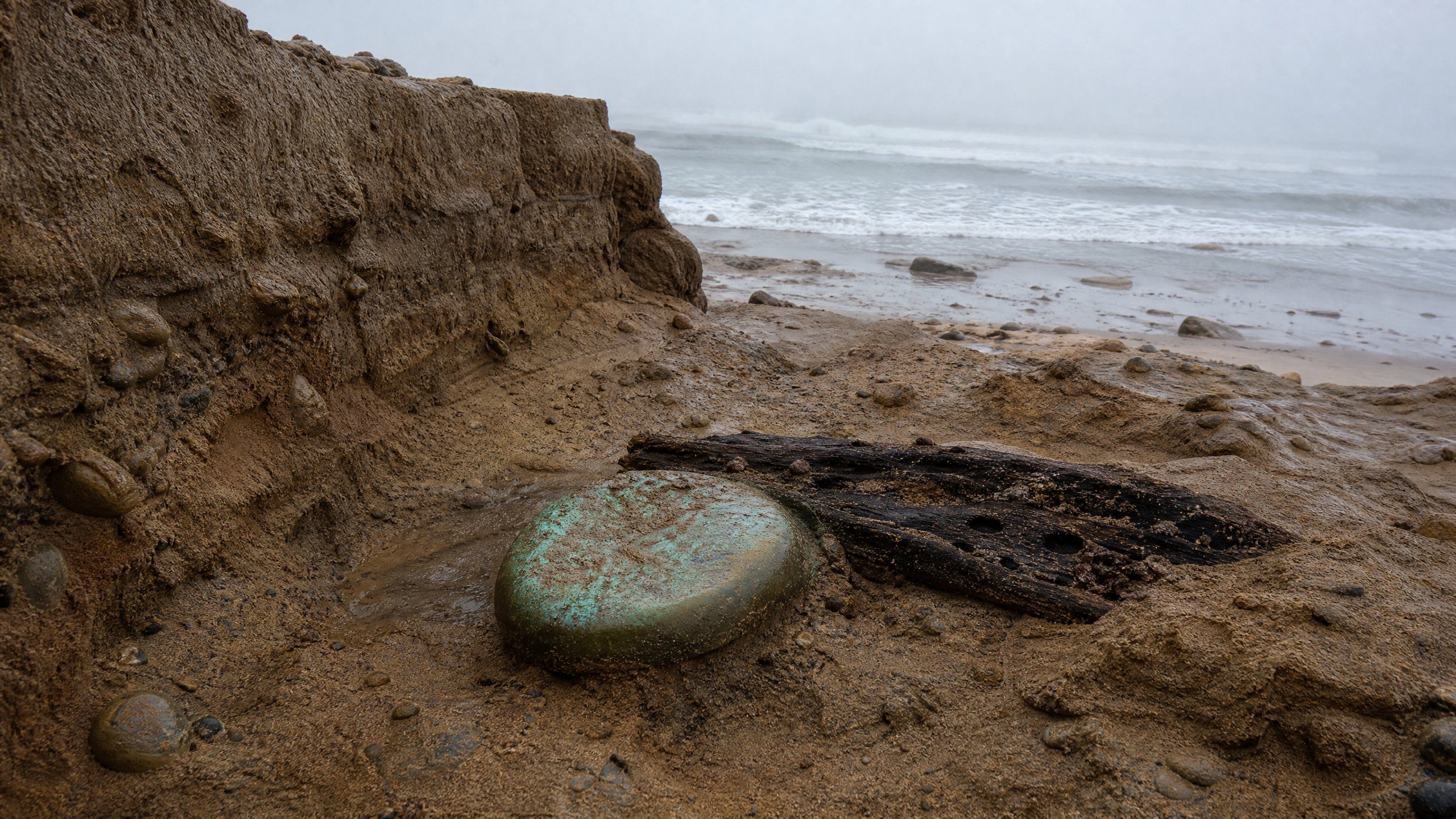
In April 2008, in a Namibian diamond mine 20 feet below sea level, a geologist picked up what looked like half a sphere of rock and found that it was copper.
The metal carried a trident mark, the hallmark of the Renaissance financier Anton Fugger, and it lay in mining area U-60 near Oranjemund, inside a stretch of Namibia’s southern coast that the diamond company Namdeb kept sealed off. Beneath the sand were the remains of the Bom Jesus, a Portuguese ship that left Lisbon for India on March 7, 1533, and was recorded as lost. Mining stopped around the site, and archaeologists went on to recover more than 2,000 gold coins, about 100 elephant tusks and 1,845 copper ingots.
The mine’s security had kept people out of the area, which helps explain how the cargo survived. The wreck has been called the oldest and most significant ever found along the western edge of sub-Saharan Africa. Dieter Noli, the mine’s resident archaeologist, described the wreck as “the only one from that time that is untouched, unlooted.”
What the sand kept
| Sailed from Lisbon | March 7, 1533 |
|---|---|
| Found | April 2008 |
| Gold coins | more than 2,000 |
| Copper ingots | 1,845 |
| Elephant tusks | about 100 |
| First exhibition | August 2024 |
A Wall Holding Back the Atlantic
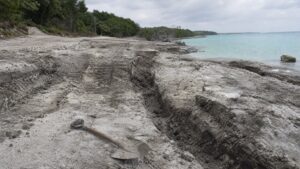
Namdeb, a joint venture of De Beers and the Namibian government, mines the seabed itself along this coast by building huge earthen walls in the surf and pumping out the water behind them. The wall at U-60 held back the Atlantic and leaked a little along its base, and closed-circuit cameras watched everyone who moved around the site.
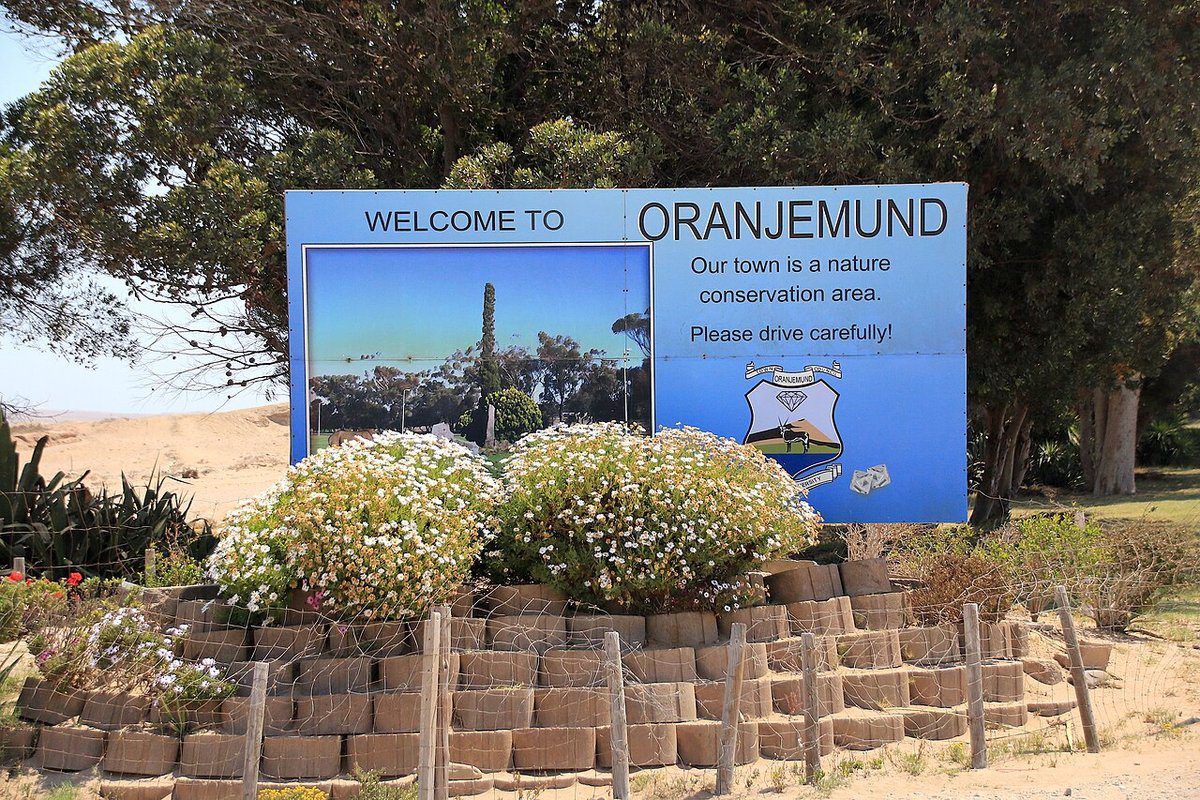
Noli recognized that the finds were old, and the company suspended mining around them and called in Bruno Werz, the director of the Southern African Institute of Maritime Archaeology. The team recorded the site “millimeter by millimeter” with a three-dimensional laser scanner, while the Atlantic sat on the far side of the wall. It was fog-bound desert coast, where winter storms bring winds over 80 miles an hour, and Noli said such a storm “is no joke.”
Read next
Herculaneum Scroll Burned by Vesuvius Read in Full by X-ray
Coins That Named the Ship
The wreck yielded cannon, swords, muskets, chain mail, astrolabes, mercury and even a lice comb, along with more than 2,000 gold coins, mostly Spanish excelentes. Among them were Portuguese coins of King João III minted only from 1525 to 1538, which narrowed the date to a window of 13 years. Portuguese records of the India fleets list 21 ships lost on that route between 1525 and 1600, and only one of them went down near Namibia.
That ship was the Bom Jesus, described as “lost on the turn of the Cape of Good Hope.” A 1533 illustration in a fleet register, the “Memória das Armadas,” shows it with the word “perdido” beside it. A letter of February 13, 1533, about gold from Spanish investors helped explain why so many excelentes were aboard.
The Voyage of 1533
Dom Francisco de Noronha captained the ship, with about 300 sailors, soldiers, merchants, priests, nobles and slaves aboard, in a fleet commanded by Dom João Pereira. Pereira wrote an account of the voyage, and it has been lost. The copper carried the mark of the Fugger banking family of Augsburg, and it was bound for the Indies, where ingots of this type were traded for spices in the first half of the 16th century.
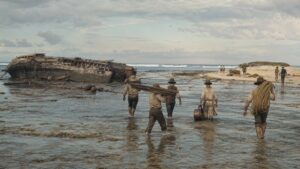
About four months out of Lisbon, a storm scattered the fleet. Currents drove the Bom Jesus north up the African coast until it struck a rock outcrop about 150 yards from shore, and the stern broke off and spilled copper into the sea.
The only human remains that archaeologists found were toe bones inside a shoe, which show that at least one person died there. So few personal possessions turned up that many of the people on board probably reached land, on a coast where no record of them has ever been found.
What Copper Saved
The ingots weighed somewhere between 17 and 22 tons, and they did more than weigh down the wreck. They protected the cargo from the marine organisms that eat wood and other organic matter, because, as Noli put it, “copper really repels them from their food.” As a result, he said, “a lot of things survived 500 years at the bottom of the sea that really shouldn’t have.”
In a Warehouse Behind the Wire
Under the UNESCO convention on underwater heritage, Namibia holds the finds, and Portugal chose not to reclaim them and sent teams to assist in 2008 and 2009. The gold coins went into a central bank vault in Windhoek, and most of the rest went to a dimly lit warehouse at the mine, where wood planks and weapon parts soaked in water tanks to remove corrosive salt.
Oranjemund set aside land for a museum, but the head of Namibia’s national museum said that the country needed a sponsor to get the project started. Noli warned that the ingots were turning green and flaking away while they waited, and that the wood and leather were slowly falling apart.
The first exhibition of the finds opened at the Jasper House Museum in Oranjemund in August 2024, sixteen years after that lump of copper was picked up.