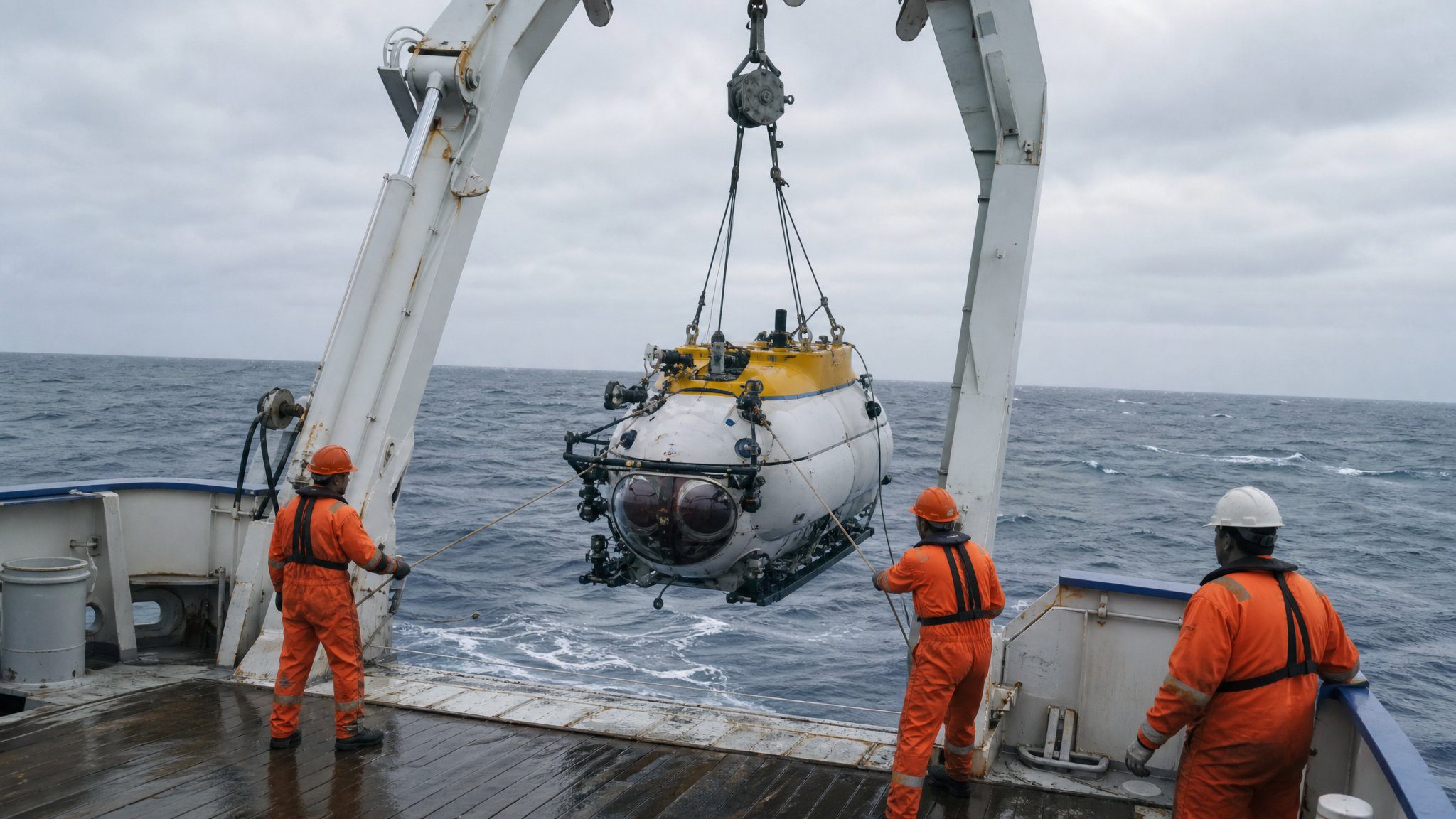
More than 4,700 meters down in the northeast Atlantic, the French submersible Nautile found steel drums of radioactive waste so badly corroded that their contents had spilled onto the mud.
The dives, between May 27 and June 28, 2026, were the second stage of a French research project called NODSSUM, short for Nuclear Ocean Dump Site Survey Monitoring. About 30 scientists sailed aboard the research ship Pourquoi Pas to a dumping ground roughly 600 kilometers off the French city of Nantes, and the three-person Nautile made around 20 dives down to the barrels.
What they saw was a small corner of a much bigger deposit. After the Second World War, European countries dropped more than 200,000 drums of radioactive waste into this part of the ocean. The scientists found some of them leaking, with radioactivity around them higher than expected.
The Atlantic dump site in numbers
| Drums dumped | More than 200,000 |
|---|---|
| Radioactivity dumped | About 36 petabecquerels |
| Depth of the dump site | More than 4,700 meters |
| Distance offshore | About 600 kilometers off Nantes |
| Barrels mapped in 2025 | 3,355 |
| Sea dumping banned | February 20, 1994 |
How Europe Sent Its Nuclear Waste to the Abyssal Plain
Patrick Chardon, a CNRS specialist in radioactivity and the environment and one of the project’s two scientific leaders, describes the waste as very-low, low and intermediate-level material. Most of it was gloves, laboratory equipment and samples. No high-level waste or spent nuclear fuel went over the side.
Workers set the waste in cement, bitumen or resin inside metal drums to weigh it down. Ships carried the drums to designated areas and dropped them into water more than 4,000 meters deep, where they sank to the abyssal plain, the flat, muddy floor of the deep ocean.
Britain was by far the biggest contributor, sinking more than 140,000 barrels in 34 operations between 1949 and 1982. Belgium dumped about 55,000 and France more than 46,000 in just two trips, in 1967 and 1969, while the Netherlands, Switzerland, Sweden, West Germany and Italy used the same sites. In all, the drums held about 36 petabecquerels of radioactivity when they were dumped, which Chardon notes is roughly 300 times less than the Chernobyl accident released in 1986.
In the mid-1980s a French expedition sent an uncrewed submersible down to photograph six of the barrels, and they were still in good condition. For the next 40 years, nobody had firm data on what had become of the rest.
Read next
Apollo 15’s Hammer and Feather Drop That Proved Galileo Right
Inflatables Under the Barrels and the End of Sea Dumping
By the late 1970s the dumping had become a target for protest. In 1978 Greenpeace’s ship Rainbow Warrior followed the British freighter Gem out to the dumping grounds with a film crew from London. As the 1980s began, activists started steering small inflatable boats right underneath the dumping ships.
In 1982 the French photographer Pierre Gleizes captured the moment a barrel of radioactive waste fell from a ship onto an inflatable driven by the activist Willem Groenier, who was seriously injured.
The next year, the countries in the London Convention, the treaty that governs dumping at sea, agreed a voluntary halt on dumping radioactive waste. Britain planned to carry on regardless, until the National Union of Seamen refused to crew the voyages and other transport unions refused to handle the waste. Its 1982 operations turned out to be its last. A full ban on dumping any radioactive waste at sea came into force on February 20, 1994.
Mapping the Dump Site With a Robot
The NODSSUM project, led by France’s national research agency CNRS, began in the summer of 2025 with an autonomous underwater robot called UlyX, built to work more than 6,000 meters down. It flew about 70 meters above the seafloor to map it with sonar, then dropped to about 10 meters to photograph what the sonar had found.
That first season mapped 3,355 barrels and brought back about 5,000 liters of seawater, 345 sediment cores and 34 fish and crustaceans to test for radioactivity from the waste. The robot showed where the drums lay, but seeing their condition up close meant sending people down.
What did the Nautile find at the dump site?
From inside Nautile, the team could see the different materials used to seal in the waste and the places where some of it had escaped. Around the barrels they detected cobalt-60 and niobium-94, which could be traced directly to the dumped waste, along with cesium-137 and americium-241.
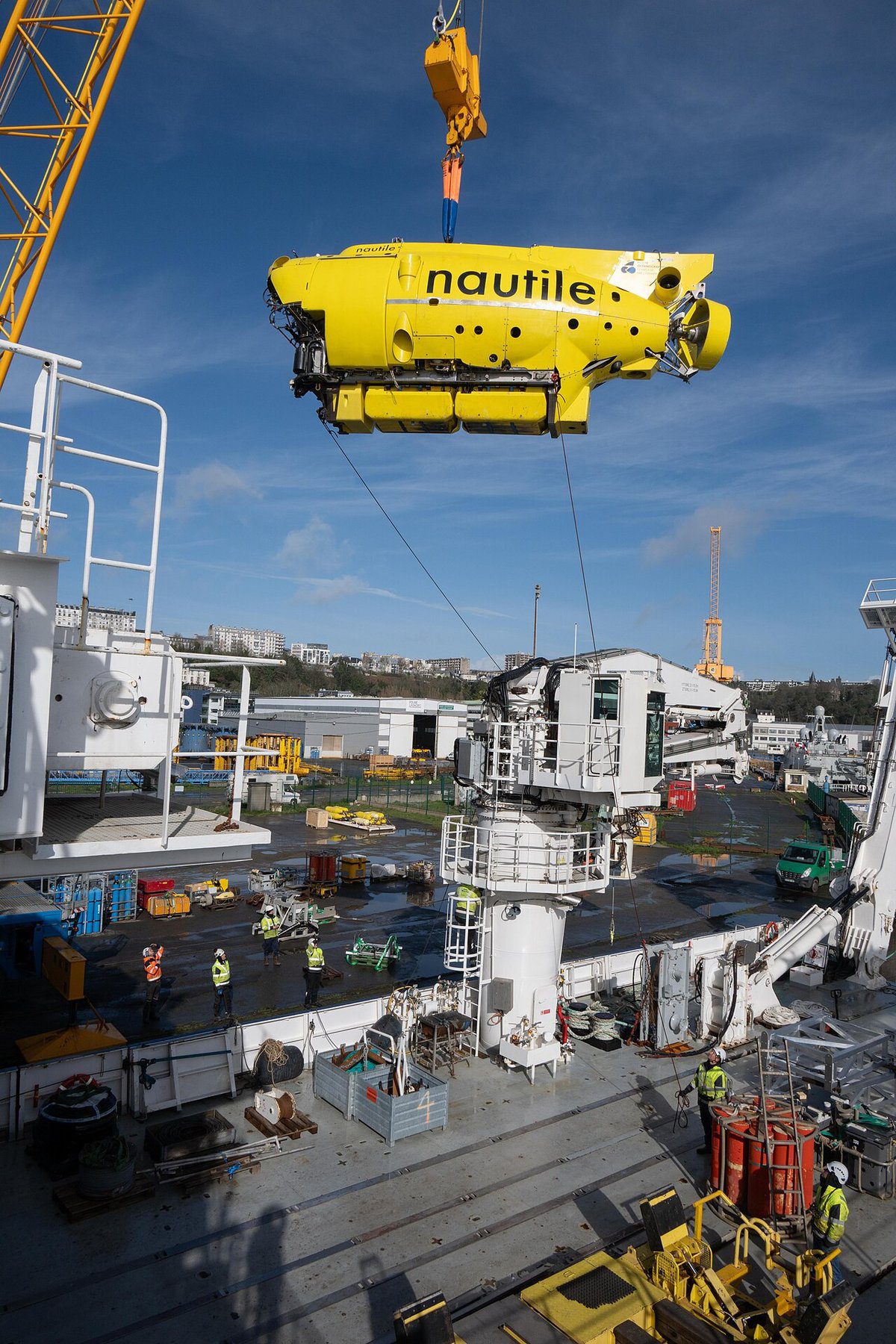
The levels were higher than expected for the area, but low enough that the submersible and its instruments showed no contamination after the dives, and the samples could be handled on deck without major protection.
The barrels have also become part of the seafloor, because on a plain made almost entirely of soft mud their hard steel stands out. Anemones and sponges had attached themselves to the drums while crabs, sea cucumbers and fish lived around them.
The team says months of laboratory work lie ahead before anyone can say what the leaks mean for deep-sea life, or declare the site harmless. Some forty years after six barrels were photographed in good condition, Nautile’s lights found anemones growing on the steel and waste spilled across the mud.