
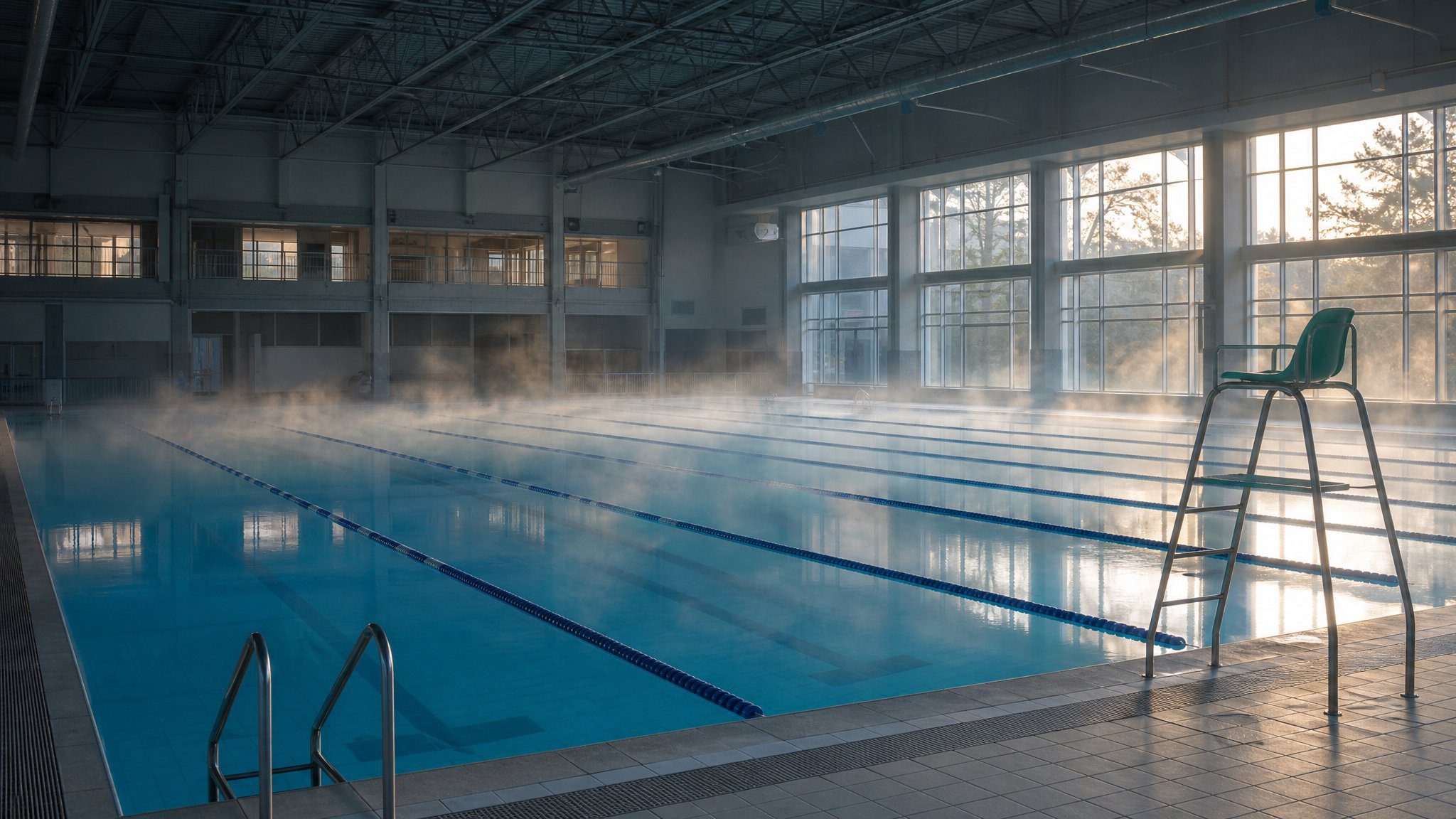
The sharp smell of a public pool usually comes from chloramines, compounds that form after chlorine reacts with the sweat, urine, skin cells, body oils and cosmetics that swimmers carry into the water.
For generations swimmers have treated that smell as proof that a pool has plenty of chlorine in it, and many still do. In a 2025 national survey for the Healthy Pools campaign, run by the American Chemistry Council and the Pool & Hot Tub Alliance, 42 percent of Americans said that a strong chlorine smell means a pool is extra clean.
The odor grows stronger as chlorine is used up and converted into irritating byproducts, so a pool that smells powerfully of chemicals is often a pool whose chlorine is already working hard against what swimmers have brought in.
The US Centers for Disease Control and Prevention puts it plainly on its pool guidance pages. When chlorine binds to the body waste swimmers bring into pools, it forms chloramines, and those chloramines irritate the skin, the eyes and the respiratory tract once they escape into the air above the water.
How Swimmer Waste Changes Pool Chemistry
Chlorine goes into pool water to kill germs, and the form that does that work is called free chlorine. Free chlorine is the chlorine still available in the water to attack bacteria and viruses and to break down contaminants that swimmers add.
Every swimmer changes the chemistry of the water before swimming a single lap. A person carries sweat, body oils, sunscreen, cosmetics, deodorant, dead skin cells and traces of urine into the pool, and much of it is invisible. The nitrogen-containing compounds in that material are the problem, and urea, which is present in both sweat and urine, is one of the main contributors.
When free chlorine reacts with those compounds, some of it becomes combined chlorine. Pool operators measure it with a simple subtraction, because combined chlorine equals the total chlorine in the water minus the free chlorine. The result shows how much chlorine has been tied up in reaction products instead of staying available to disinfect.
Chloramines make up the main part of that combined chlorine in a pool. They come in three forms, monochloramine, dichloramine and trichloramine, and trichloramine causes the most trouble. It escapes from water into the air more readily than the other two, it causes more severe irritation, and it forms more quickly when the water’s pH is low.
The amount of urine in a busy pool is larger than most swimmers would guess. In a 2017 study in Environmental Science & Technology Letters, chemists at the University of Alberta tested more than 250 samples from 31 pools and hot tubs in two Canadian cities. They measured acesulfame potassium, an artificial sweetener that passes through the body unchanged and ends up in urine.
The sweetener turned up in every pool and hot tub they tested, at levels up to 570 times higher than in the tap water used to fill them. From those levels the team estimated that one pool of about 220,000 gallons, around a third the size of an Olympic pool, held nearly 20 gallons of urine.
When they are asked in surveys, swimmers admit to adding plenty of it themselves. In the same 2025 Healthy Pools survey, 53 percent of American adults said they had peed in a pool as an adult. Only 16 percent recognized that urine, sweat, sunscreen and dirt all weaken chlorine’s ability to kill germs.
Why Red Eyes Point to Chloramine Buildup
Red, stinging eyes after a swim are usually blamed on chlorine itself, and the Healthy Pools survey found that 77 percent of Americans believe exactly that. The irritation usually comes from chloramines reaching the sensitive surface of the eye, and the same compounds can also irritate the skin, the nose and the lungs.
The eyes are exposed directly to the water and to the thin layer of air just above it. When chloramines collect near the surface, swimmers meet them with every breath and every stroke. The effects can include stinging, redness, itching, coughing, wheezing and a burning feeling inside the nose.
People who spend their working lives beside indoor pools show the long-term side of this exposure. A 2007 study in the European Respiratory Journal surveyed 624 workers at 38 swimming facilities in the Netherlands and measured trichloramine in the air. Workers with higher cumulative exposure reported more hoarseness, loss of voice and sinusitis, and the group as a whole had more respiratory symptoms than a Dutch population sample.
A sharp smell and burning eyes are warning signs for a pool operator. They mean the water should be tested and the ventilation checked, and they often mean that the pool needs more usable chlorine to deal with the waste in it.
Read next
Your Brain Is Predicting Reality Before You See It
The Air Layer Above Indoor Pools
Chloramines are a much bigger problem indoors because they move from the water into the surrounding air. Outdoor pools have open air around them to carry those gases away. Indoor pools depend on ventilation systems to pull out contaminated air and bring in fresh air from outside.
The CDC notes that chloramine gas is heavier than air, so it settles in a layer on top of the water’s surface. That is exactly where swimmers breathe during laps, and where small children splash. Disturbing the surface by swimming, splashing or running spray features releases even more of the gas into that breathing zone.
Winter makes the problem worse at many indoor facilities in colder climates. Operators trying to hold down heating costs often set their air handling systems to bring in less cold outside air and to exhaust less of the warm, polluted air. The CDC warns that when the air over the water is already full of chloramines, more of them stay in the water, which harms swimmers further.
A CDC report on an outbreak in Nebraska in December 2006 shows how bad it can get. On December 25 a healthy six-year-old boy spent about three hours swimming in the indoor pool at a motel, and he began coughing and struggling to breathe while he was still in the water. That night he was taken to an emergency department with red eyes, a barking cough and wheezing.
He was moved to a pediatric intensive care unit with a diagnosis of chemical inflammation of the airway, and he recovered and was discharged the next morning. State investigators then called guests who had stayed at the motel between December 15 and 26 and identified 24 people who had become ill with eye or breathing symptoms after entering the pool area.
The pool failed on almost every measure that the state inspectors checked. The combined chlorine was 4.2 parts per million, eight times the state maximum of 0.5, while the free chlorine was 0.8 parts per million, less than half the state minimum. The pH was 3.95, about half the minimum of 7.2, which is the kind of acidic water in which trichloramine forms fastest.
The operator’s own logs showed combined chlorine above the limit for 26 consecutive days before the outbreak. The ceiling exhaust fan had been switched off and the windows of the enclosed courtyard were shut against the cold. The operator was not required by Nebraska rules to hold any certification and had no verifiable training.
The report noted two similar outbreaks at indoor motel pools in Illinois in 2004, in which 72 people, mostly children, became ill within minutes of entering the pool areas. It also observed that chloramines are not considered a health hazard at outdoor pools, where the gas can blow away.
Does a strong pool smell mean too much chlorine?
A pool with an overpowering chemical odor usually needs more chlorine, since the smell points to depleted free chlorine and a buildup of combined chlorine. The CDC says most health departments in the United States limit combined chlorine to 0.4 parts per million or less. When it climbs higher, operators use a process called superchlorination, also known as breakpoint chlorination, to burn off the chloramines and convert them to nitrogen gas.
The procedure is controlled and happens with the water empty of swimmers. The CDC guidance tells operators to close the pool, make sure the area is well ventilated, raise the free chlorine to 10 times the combined chlorine level, and then bring the free chlorine back down to its normal operating range. Some pools also break down chloramines with ultraviolet light or ozone systems.
Ventilation matters as much as water chemistry at an indoor pool. The CDC advises operators to set up air systems that move fresh air across the surface of the water and toward exhaust vents, and to send chloramine-laden air outside instead of recirculating it. It acknowledges that heating fresh winter air costs money, and it argues that swimmer discomfort and illness can cost more.
Swimmers can reduce the problem before they ever get into the water. The CDC says even a quick rinse in the shower removes much of the body waste that forms chloramines, and using the toilet before swimming keeps urine out of the water. The less waste that enters the pool, the less chlorine gets used up and the fewer chloramines form.