In the third century BC, a librarian in Alexandria worked out the size of the whole Earth from the angle of a shadow cast at noon.
The librarian was Eratosthenes, a Greek scholar who ran the great library of Alexandria in Egypt for the Ptolemaic kings. He knew that at noon on the summer solstice the sun stood directly over the city of Syene, far to the south, so that upright pointers there cast no shadow. At the same hour in Alexandria, the shadow of an upright pointer showed the sun about 7.2 degrees away from straight overhead, which is one fiftieth of a full circle.
Eratosthenes reasoned that if the Earth was a sphere and the sun’s rays arrived parallel, the two cities had to be one fiftieth of the way around the globe from each other. He took the distance between them as 5,000 stadia and multiplied it by fifty, giving a circumference of 250,000 stadia.
The measurement
| Shadow angle | about 7.2 degrees, one fiftieth of a circle |
|---|---|
| Distance used | 5,000 stadia |
| Result | 250,000 stadia |
| Cities | Syene and Alexandria |
A Shadowless Noon at Syene
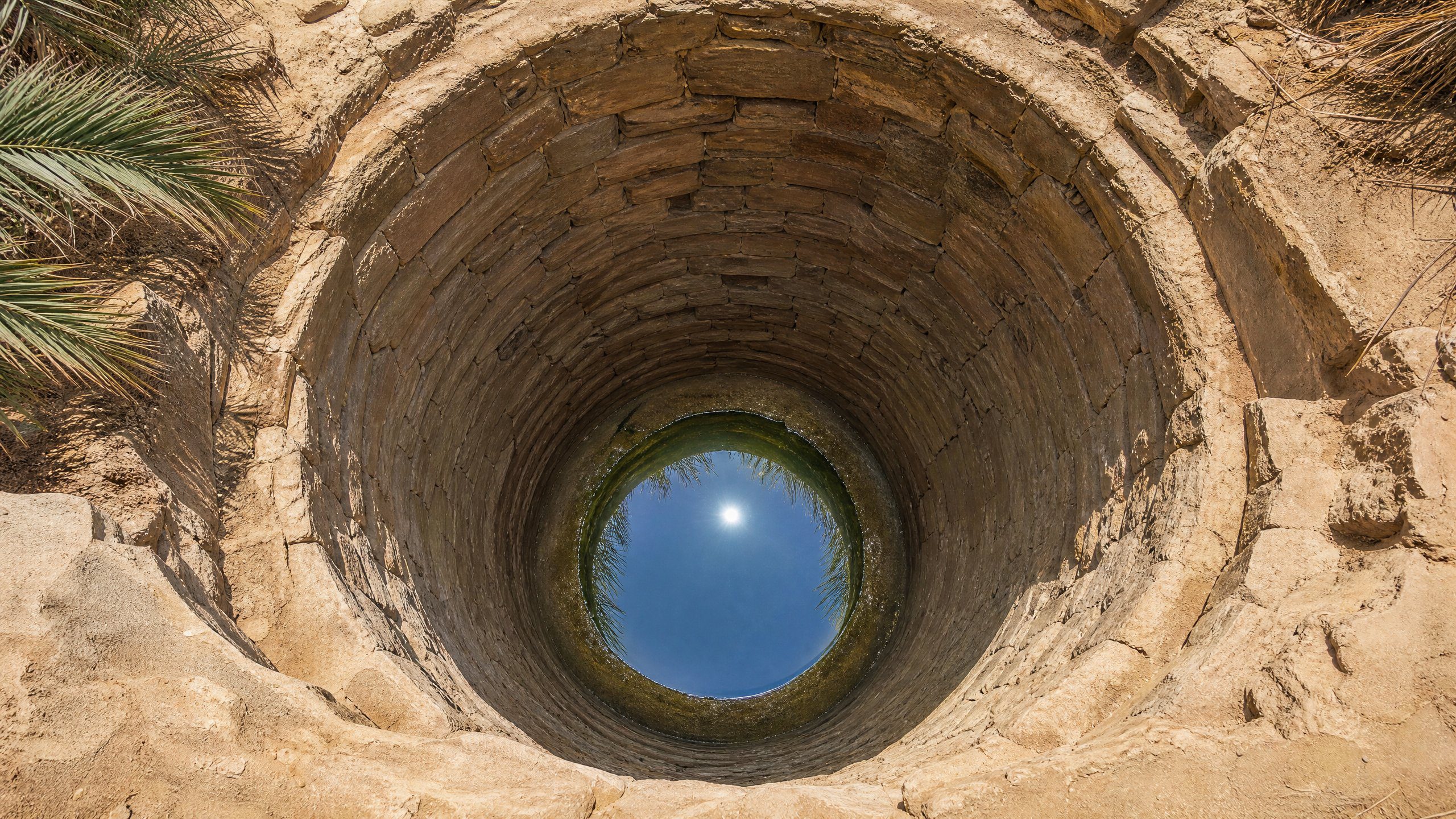
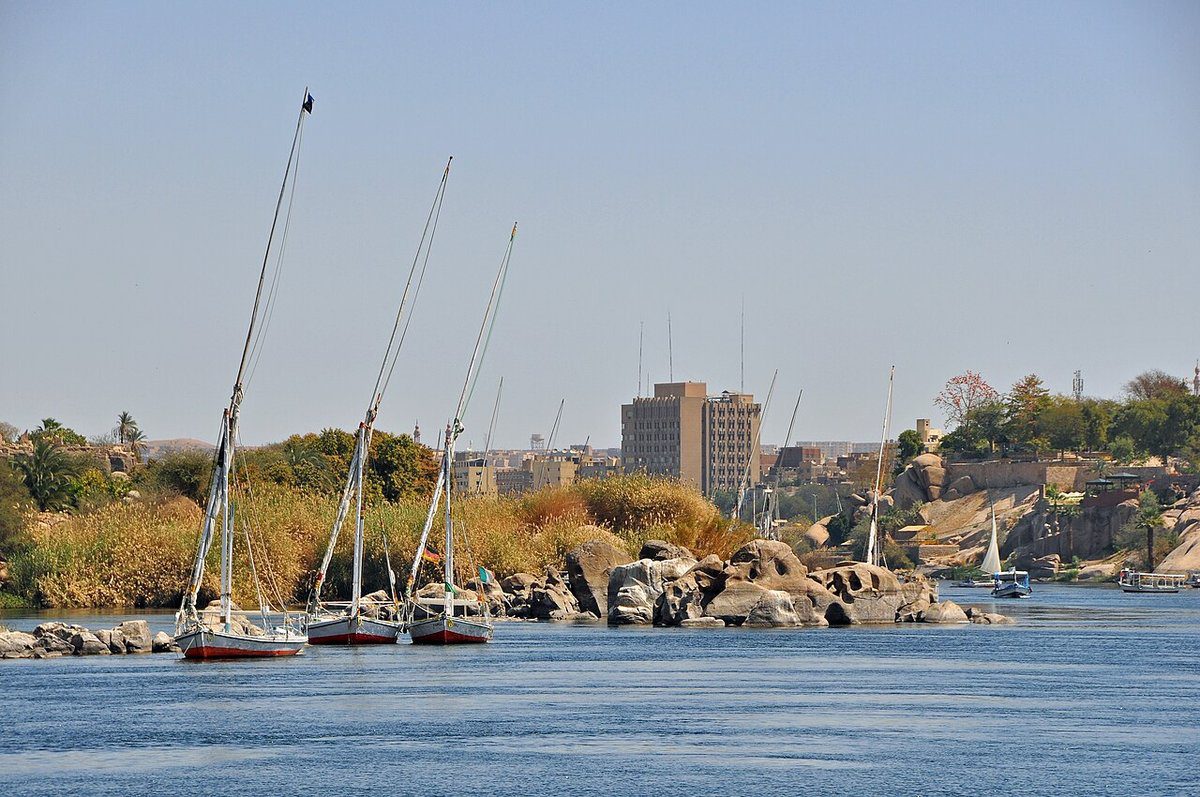
Syene, the modern Aswan, lay far up the Nile from Alexandria, close to the line where the sun stands directly overhead at noon on the longest day of the year. Travelers reported a well there in which the noon sun on the summer solstice lit the water at the very bottom without casting any shadow. On that day the pointers of sundials in Syene threw no shadow either.
Read next
How a Solar Storm Dated the Vikings in Newfoundland to 1021
In Alexandria, at noon on the same day, the pointers of sundials still cast a short shadow. The astronomer Cleomedes describes the sundial as a bowl with an upright pointer, in which the shadow traced a small arc on the inside. Eratosthenes found that this arc was one fiftieth of the full circle of the bowl, an angle of about 7.2 degrees.
Eratosthenes needed two assumptions to turn that one angle into a measurement of the whole planet. The first was that the sun is so far away that its rays reach Syene and Alexandria in parallel lines. The second was that the two cities lie on the same north and south line. If both held, the angle of the shadow in Alexandria equaled the angle at the center of the Earth between the two cities.
From 5,000 Stadia to 250,000
Eratosthenes took the distance from Alexandria to Syene to be 5,000 stadia. The surviving texts do not say how he arrived at that figure. One modern account has him hiring bematists, surveyors trained to walk in steps of equal length, while the historian Dennis Rawlins has argued that the distance came from earlier and more accurate sources.
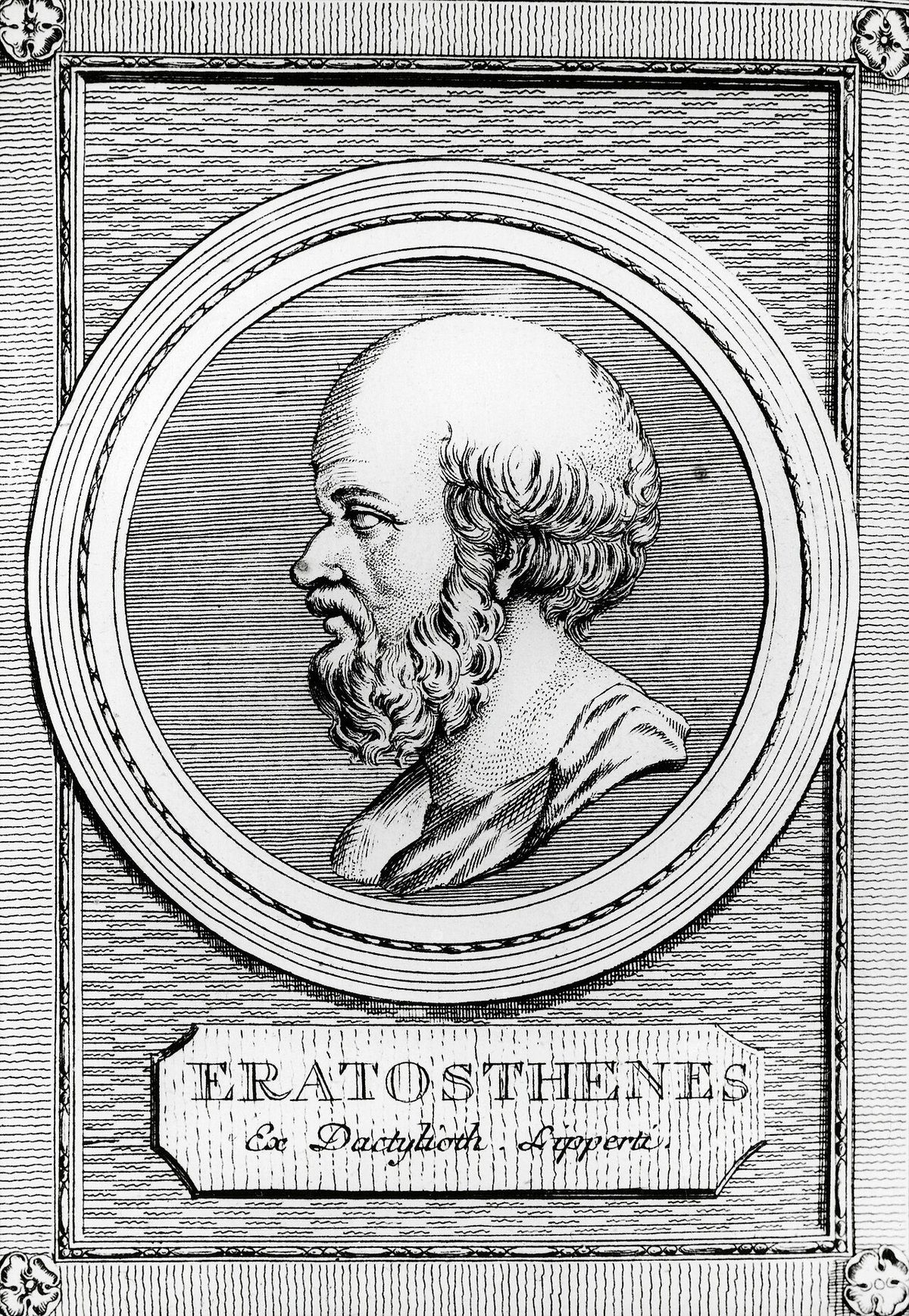
If 5,000 stadia was one fiftieth of the way around the Earth, the whole circumference was fifty times as much, or 250,000 stadia. Eratosthenes wrote up the method in a book, On the Measurement of the Earth, which has not survived. His reasoning comes down through later writers, chiefly Cleomedes, along with Theon of Smyrna and the geographer Strabo.
How accurate was Eratosthenes’ measurement of the Earth?
The accuracy of the result depends on how long a stadion was, and modern scholars disagree about which stadion Eratosthenes used. If it was 157.2 meters, a length deduced from the Roman writer Pliny, the result is very close to the modern value. If it was 166.7 meters, as another scholar has proposed, it is less accurate. The most likely range of 155 to 185 meters puts his answer somewhere between about 3 percent too small and 15 percent too large.
The assumptions behind the method were not exact either, because Syene does not lie precisely on the tropic and is not due south of Alexandria. The distance between the two cities is also shorter than 5,000 stadia. These errors tend to pull in opposite directions and partly cancel each other out, which is one reason his estimate came out as close as it did.
Rawlins has argued that the one measurement Eratosthenes made himself was the angle of the noon sun at Alexandria on the solstice, which he recorded as 7 degrees 12 minutes. On Rawlins’s calculation that reading was off by 16 minutes of arc, about a quarter of a degree. The other figures in the method, in his view, came from earlier sources that were more accurate than the librarian’s own reading.