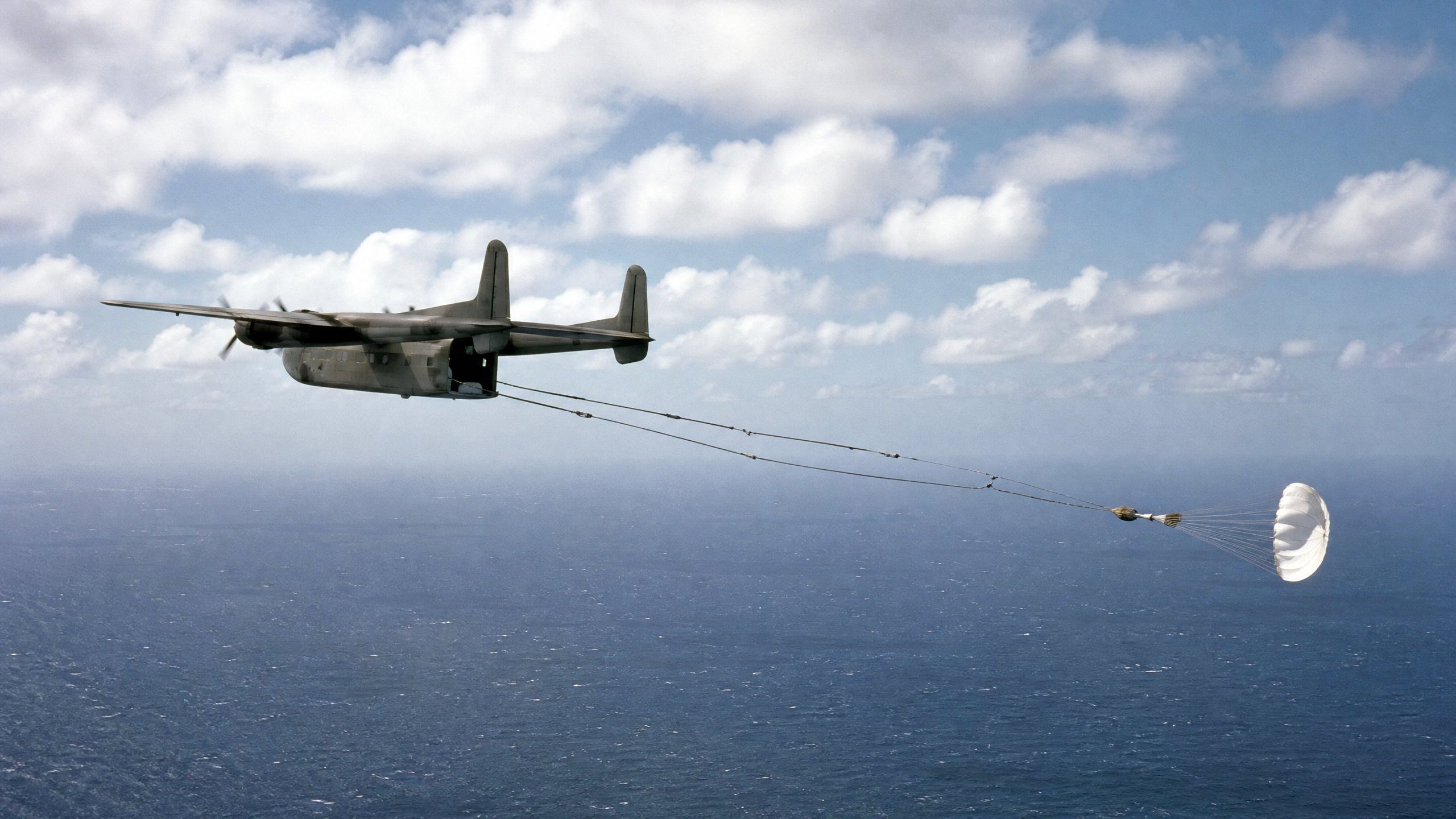
On August 19, 1960, a transport plane over the Pacific made its third pass at a falling parachute and hooked the first spy photographs ever taken of the Soviet Union from orbit.
The plane was a C-119 Flying Boxcar called Pelican 9, flown by Air Force Capt. Harold Mitchell out of Hickam Air Force Base in Hawaii, and it caught the capsule at 8,500 feet. The capsule had come down from a satellite that the public knew as Discoverer 14, a scientific test flight. In truth it was part of Corona, a secret CIA and Air Force program, and its one roll of film held more coverage of Soviet territory than the entire three-year U-2 spy plane program had delivered.
No satellite of the time could send a picture home by radio, so the only way to see what a camera had shot from orbit was to drop the film back to Earth and catch it. Air Force crews kept doing that for nearly twelve years, and the program stayed classified until 1995.
The catch in numbers
| Date | August 19, 1960 |
|---|---|
| Plane | C-119 Flying Boxcar, Pelican 9 |
| Altitude | 8,500 feet |
| Film | about 3,000 feet |
| Ground covered | 1.65 million square miles |
| Declassified | February 1995 |
A Dozen Failures and a Lost U-2
President Dwight Eisenhower approved Corona in 1958, after the Air Force publicly canceled the photographic program from which it grew. To explain the launches from Vandenberg Air Force Base in California, the government described the satellites as Discoverer, a program that studied conditions beyond the atmosphere and tested recovery techniques. James Plummer, the Lockheed manager of the program, said later that “a lot of important people from big universities said it couldn’t be done.”
For a long time they looked right, because a dozen or more launches between early 1959 and the summer of 1960 failed to return any images. Some rockets misfired, some satellites never reached orbit, and some cameras failed, with little telemetry to show what had gone wrong. Officials at the CIA and the Defense Department wanted the whole thing canceled, and Eisenhower kept it going.
The stakes rose on May 1, 1960, when the Soviets shot down the U-2 flown by Francis Gary Powers and ended overflights of the Soviet Union by that aircraft. Plummer later said that what the program had going for it that summer was that the Air Force and the CIA had no other solution.
How to Catch a Capsule From Orbit
The film came down in a gold-colored capsule about the shape and size of a kettledrum, ejected from orbit and protected by a heat shield through reentry. At around 60,000 feet the shield fell away and a parachute opened, leaving the capsule to sink toward the ocean at something like 1,500 to 2,000 feet a minute. An airborne command post with homing equipment helped guide the recovery planes toward it.
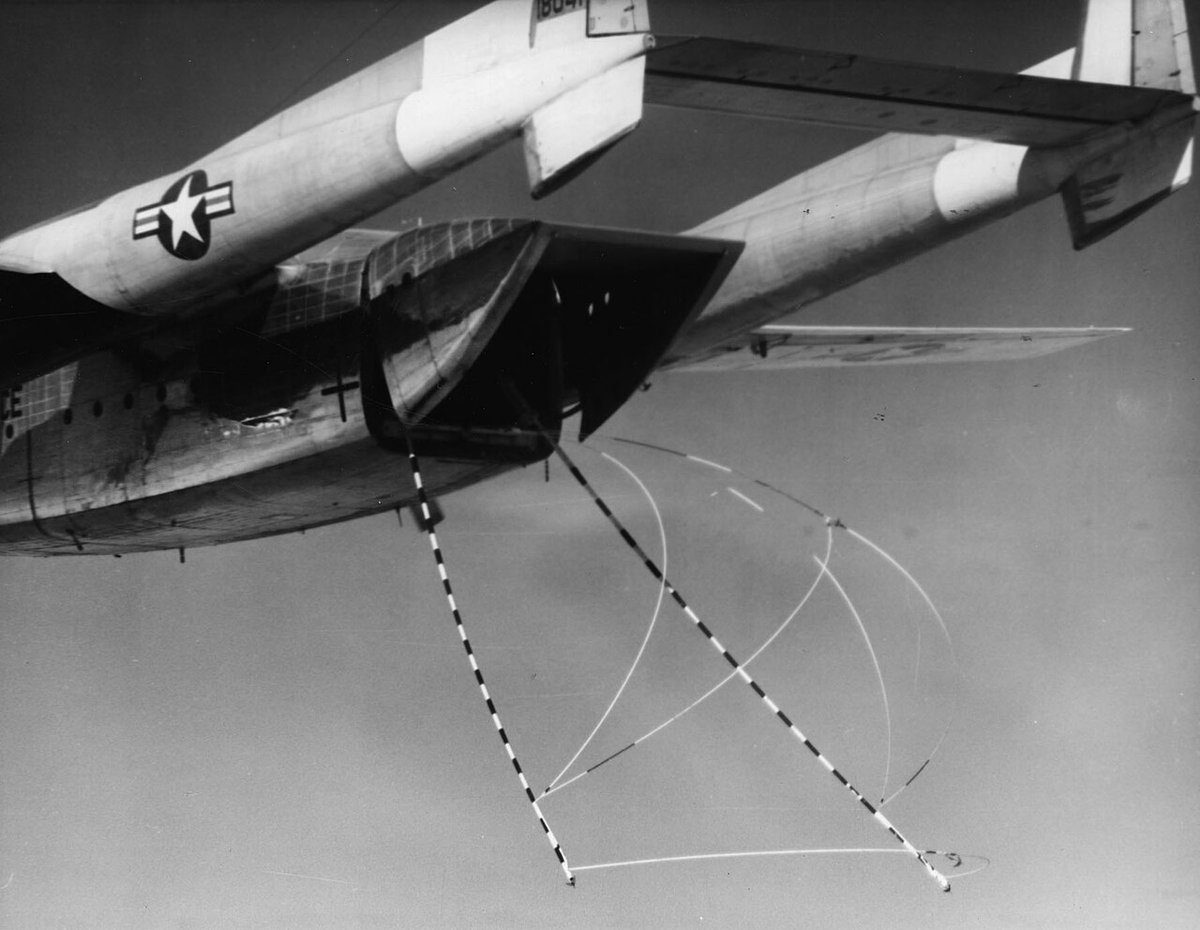
Each C-119 carried two 34-foot poles at its open rear, a recovery line strung with eight brass hooks and a winch to reel in the catch. The pilot flew past the descending parachute, circled back and timed his approach so that the top of the canopy would pass about six feet below the aircraft. A pyrotechnic cutter nicknamed the guillotine could sever the line in an emergency. The crew at the rear wore parachutes and life jackets, and they carried knives for any riser that fouled them.
A missed capsule still had a chance, because it was built to float long enough for Navy boats to reach it. After two days a salt plug dissolved and the capsule sank, so that a missed catch would never leave film for the Soviets to pick up. Mitchell had flown B-17s in World War II and transports in the Berlin Airlift, and he said of his technique, “I liked to recover a parachute close up to the belly of the airplane.”
Read next
Jim Irvine’s Lockdown Walk and Britain’s Roman Trojan War Mosaic
The Third Pass of Pelican 9
The capsule from Discoverer 13, a flight with no camera aboard, had come down earlier that month before Mitchell’s crew could reach it. It was recovered from the ocean instead, and it became the first man-made object recovered from orbit. Discoverer 14 went up from Vandenberg on August 18 with about 20 pounds of film, and the next morning the crews at Hickam were briefed at 7 a.m.
Pelican 9’s first two attempts missed, and on the third the aircraft came in at 120 knots with the parachute in front of it. Staff Sgt. Algaene Harmon, the chief pole operator, called out, “Good hit, Captain, we’ve got her in tow.” The winch operator, Technical Sergeant Louis Bannick, brought the capsule aboard still black with soot from the retrorockets. He handed Mitchell a torn piece of the parachute with the words, “For you, captain.”
The film ran to about 3,000 feet and covered more than 1.65 million square miles of Soviet territory, beginning with an air base on the Arctic coast. The images were fuzzy and couldn’t show anything smaller than about 40 feet across. They were still enough to begin answering the question in Washington of whether the Soviets really had the thousands of long-range missiles that some feared.
Twelve Years of Catches, Then Secrecy
Later Corona cameras could pick out objects about five or six feet across, and by the time the program ended in 1972 crews had retrieved 153 film canisters holding about 800,000 images. President Lyndon Johnson put its value plainly in 1967, saying, “Because of satellites, I know how many missiles the enemy has.”
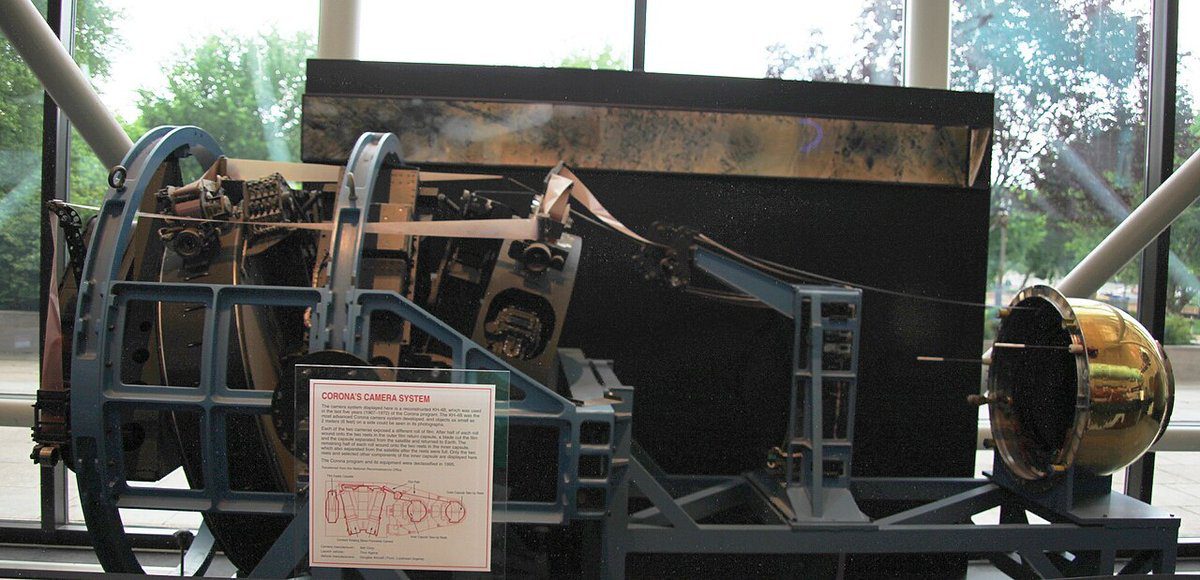
Mitchell received the Distinguished Flying Cross for the catch, his crew received Air Medals, and the squadron won the 1960 Mackay Trophy.
After the catch, the Air Force sent the crew on a publicity tour that presented the mission as scientific research, and that account held for more than three decades. In February 1995, President Bill Clinton declassified the program, and people who had worked on it could at last say what the film had shown.