On November 14, 1902, a Mississippi guide named Holt Collier knocked a black bear senseless with his rifle, roped it to a tree and sent for the president.
Theodore Roosevelt had come to the Mississippi Delta to hunt bear and hadn’t seen one, and his hosts were determined that he would get his shot. When he arrived at the tree, near the settlement of Onward, he refused to fire at a stunned and tied animal and told the party to put it out of its misery. A Washington Post cartoon of the scene ran two days later, and in Brooklyn a candy-shop owner named Morris Michtom and his wife Rose answered it with a stuffed toy they called Teddy’s bear.
The bear itself was a full-grown black bear of more than 200 pounds, it was killed with a knife shortly afterward, and Roosevelt disliked the nickname that the toy went on to carry around the world.
The Hunt at Onward
Andrew Longino, the governor of Mississippi, had invited Roosevelt to a bear hunt in the Delta that November, and the president accepted eagerly. Roosevelt wanted first blood, and he told Collier that he had to see a live bear on the first day. Reporters came too, and the crowd around him annoyed him enough that he wrote to his son Kermit that it was “like hunting with a 4th of July procession.”
The guide on whom it all depended had been born into slavery on a Mississippi plantation and had served in the Civil War with the Ninth Texas Cavalry. Collier was a famous bear hunter by 1902, and the U.S. Fish and Wildlife Service credits him with killing more than 3,000 bears in his lifetime. On the day of the hunt his dogs found a trail while Roosevelt and a companion waited at the edge of a canebrake.
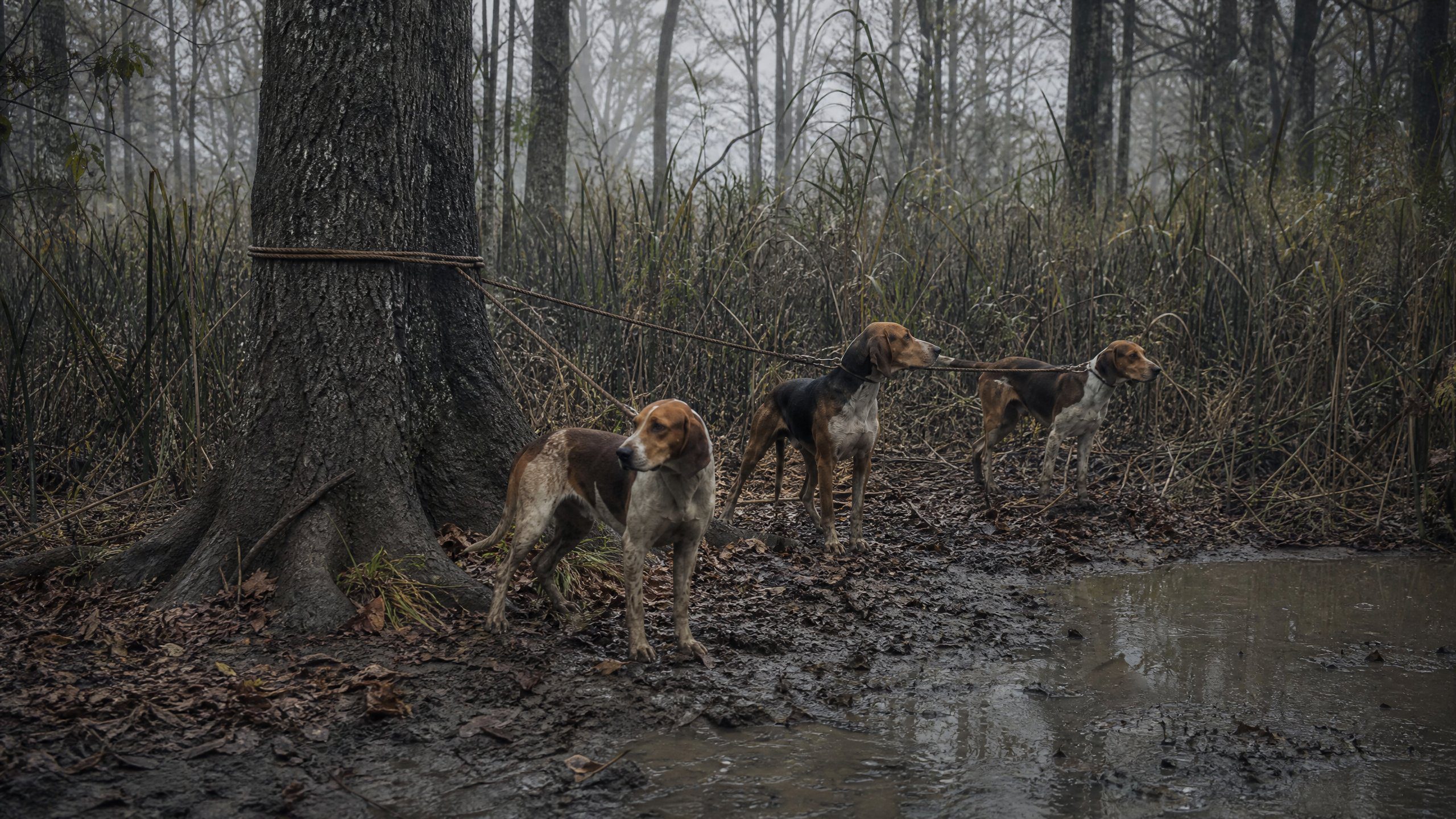
The dogs seemed to move off in another direction, so Roosevelt went back to camp for lunch, and that was when the dogs found their bear. They brought it to bay at a waterhole, where it killed one of the hounds. Collier hit it across the skull with the butt of his rifle, carefully, because he wanted it alive, and then threw a rope around its neck and tied it to a tree.
“Put It Out of Its Misery”
Roosevelt came back from camp to find his party standing around a dazed animal roped to a tree. The men around him shouted, “Let the president shoot the bear,” and he refused, considering it unsportsmanlike to fire on a tied animal. He also forbade anyone else from shooting it, which left the bear still alive and in a bad way.
His instruction was to “put it out of its misery,” and John Parker, a member of the party who later became governor of Louisiana, killed it with a Bowie knife. Roosevelt didn’t take a bear on the trip, and he never ordered this one released, although that version became a popular one.
Read next
The Day Ethiopia Destroyed an Invading Italian Army at Adwa
Berryman’s Cartoon
Clifford Berryman, the Washington Post’s political cartoonist, read the Associated Press report and drew Roosevelt refusing to shoot a roped bear. “Drawing the Line in Mississippi” ran on November 16, 1902, and its title also played on a border question then being argued between Mississippi and Louisiana. Berryman said he had worked from the description sent by the Associated Press, and his first bear looked realistic and fairly fierce.
He made it smaller and rounder in later drawings, until it was what he described as “a poor measly little cub with most of its fur rubbed off.” He then kept the bear in all of his later Roosevelt cartoons, and the president enjoyed them. The cub that the country remembers came from those drawings, and it has little in common with the animal Collier roped.
Rose Michtom’s Stuffed Bear
Morris Michtom had fled pogroms in Russia as a teenager and ran a penny candy store in Brooklyn’s Bedford-Stuyvesant, where he and his wife sold stuffed toys on the side. After the cartoon appeared, Rose hand-sewed a plush bear, and Morris set it in the shop window with a sign reading “Teddy’s Bear.” It sold quickly enough that the couple began making more, and by 1903 they were producing them in quantity.
Michtom wrote to Roosevelt to ask permission to use his name, and the president agreed, though he took no money from it and apparently didn’t expect the name to do much for sales. The couple gave up the candy business and built what became the Ideal Novelty and Toy Company, one of the largest toy makers in the United States. Roosevelt himself used the bear in his 1904 reelection campaign, and although the craze took a few years to spread, by 1906 it had reached the whole country.
The name attached to all of this was one the president had long disliked. His daughter Alice said, “Father didn’t like to be called Teddy,” and when a lawyer used it in his presence Roosevelt called it an “outrageous impertinence.” In 1910, the Boston Globe quoted him as saying, “I used to think that it lowered my dignity to have them call me Teddy,” and then adding, “now, don’t you know, I rather like it.”