
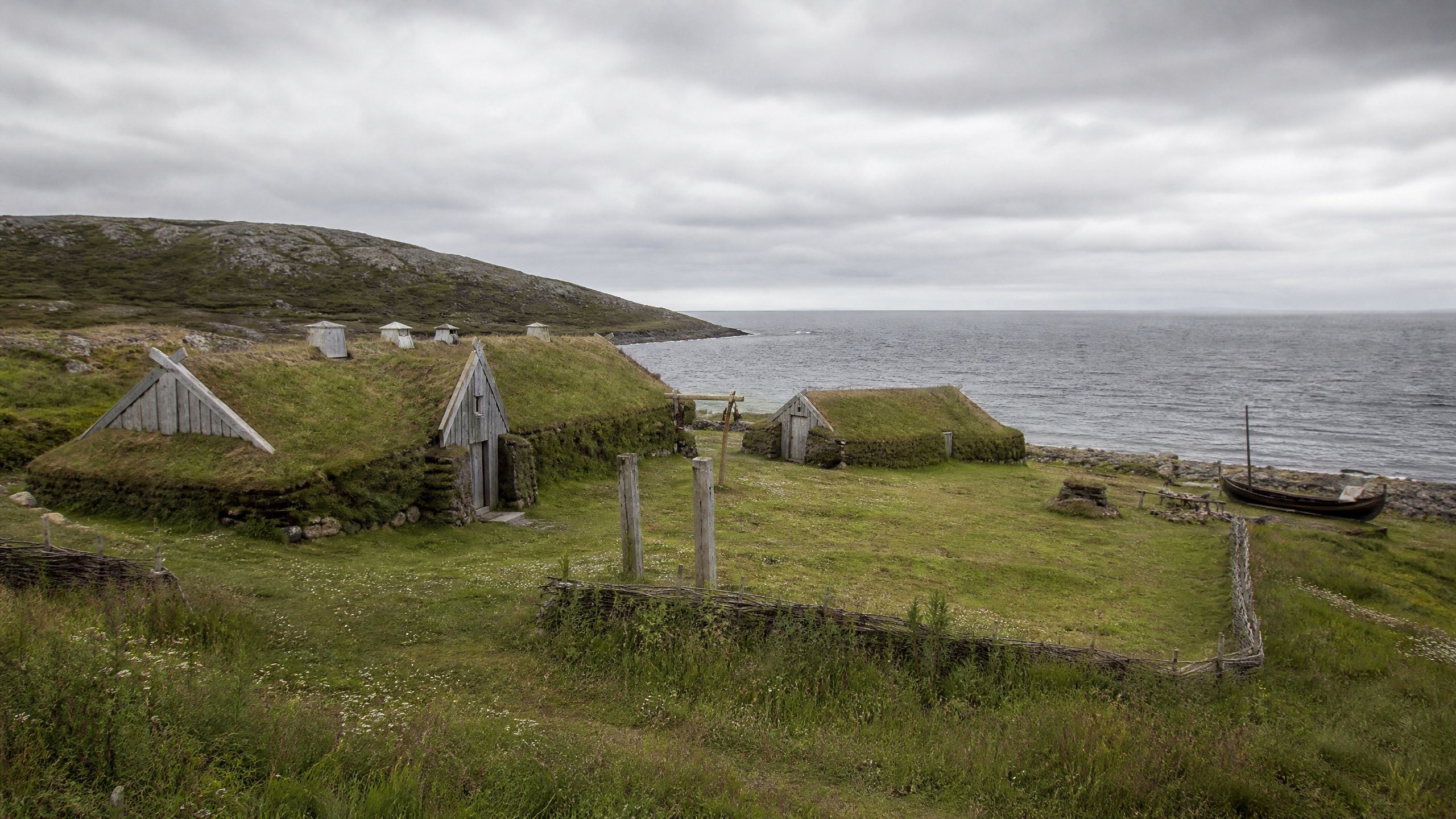
Three scraps of wood left by Vikings in Newfoundland each hold a tree ring from 993, and counting from that ring to the bark showed the trees were cut in 1021.
In October 2021 a team led by Margot Kuitems and Michael Dee of the University of Groningen in the Netherlands published the result in Nature. The wood came from L’Anse aux Meadows, at the northern tip of Newfoundland, which is the only confirmed Norse site in the Americas outside Greenland. The year 1021 is the earliest exact date for Europeans in the Americas, 471 years before Christopher Columbus crossed the Atlantic in 1492.
The method depended on a burst of radiation from the Sun in the year 992 that raised the amount of radiocarbon in the atmosphere. Trees growing everywhere on Earth stored that extra radiocarbon in the ring they formed in 993. That ring gave the researchers a fixed point to count from in wood that had no written record attached to it.
Dating the Norse wood
| Site | L’Anse aux Meadows, Newfoundland |
|---|---|
| Samples | Three pieces, each from a different tree |
| Marker ring | 993 |
| Rings to the bark | 29 |
| Year trees were cut | 1021 |
| Published | October 2021, in Nature |
A Norse Site With No Exact Date
The Norse voyages west were known for centuries from the Icelandic sagas, which describe Greenlanders sailing to a land they called Vinland. Kuitems, the study’s first author, has pointed out that the sagas were “oral histories that were only written down in the 13th century,” at least 200 years after the events they describe.
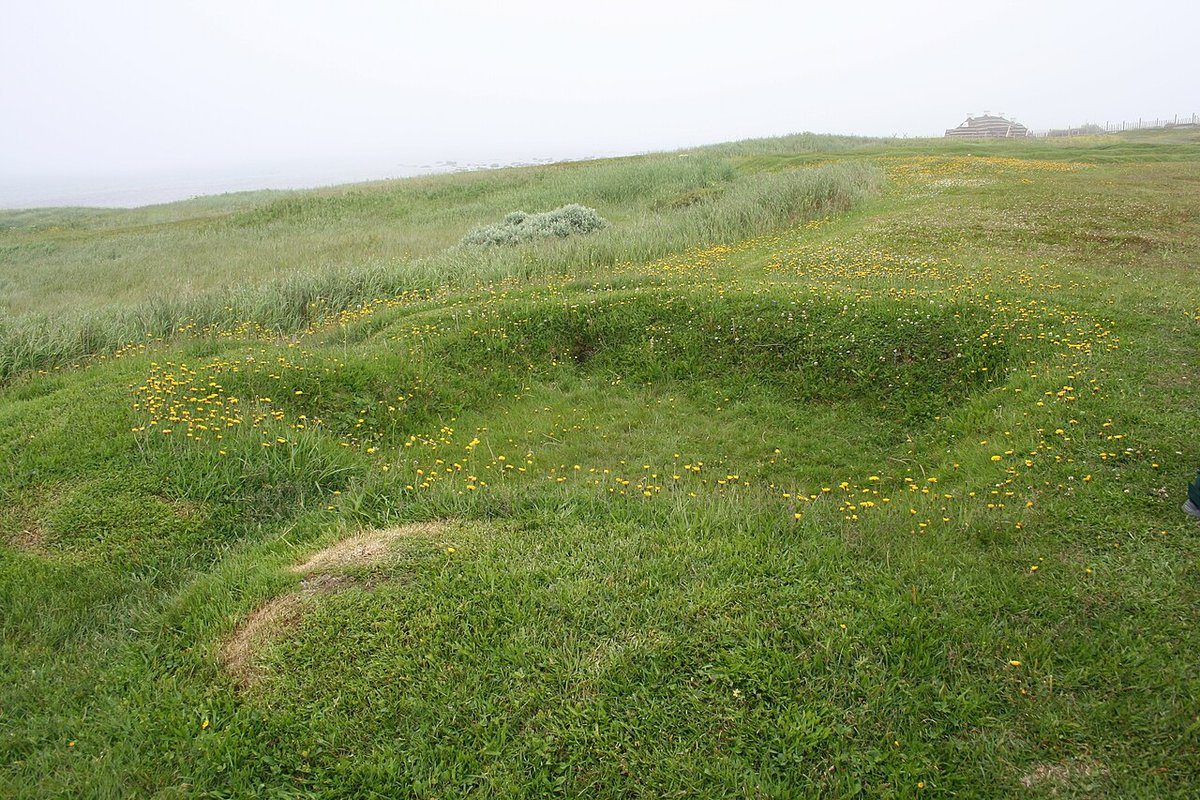
The physical proof came in 1960, when the Norwegian explorer Helge Ingstad was shown some overgrown ridges near the fishing village of L’Anse aux Meadows by a local resident, George Decker. Ingstad thought the ridges covered ancient buildings, and his wife, the archaeologist Anne Stine Ingstad, led excavations there from 1961 to 1968.
The buildings were Norse in style, built by people who had come from Greenland around the turn of the millennium. The exact timing of the Norse presence remained a matter of debate, because no method could tie the occupation to a single year.
The Wood Cut With Metal Blades
The Groningen team went back to wooden objects excavated at the site and archaeologically linked to the Norse. They examined four of them, and three would carry the signal they were looking for: a stump, a log and a branch, each from a different tree.
Each piece showed clear evidence of cutting and slicing by blades made of metal. That detail tied the wood to the Norse, because the Indigenous peoples of the area did not make or use metal tools at the time.
The pieces also kept their outermost ring, the one that formed just under the bark in the last season the tree was alive. Without that final ring the researchers could have found the year 993 in the wood and still not known how many more years the tree had grown before it was cut.
Read next
The Girl Who Compared Fast-Food Ice With Toilet Water
The Radiocarbon Spike From 993
The signal the team used was found by the Japanese physicist Fusa Miyake and her colleagues, who reported in 2013 that tree rings record a sudden jump in radiocarbon in the 990s. Researchers link it to a burst of high-energy particles from the Sun. Dee said that this uplift in radiocarbon production “has been detected in tree-ring archives from all over the world.”
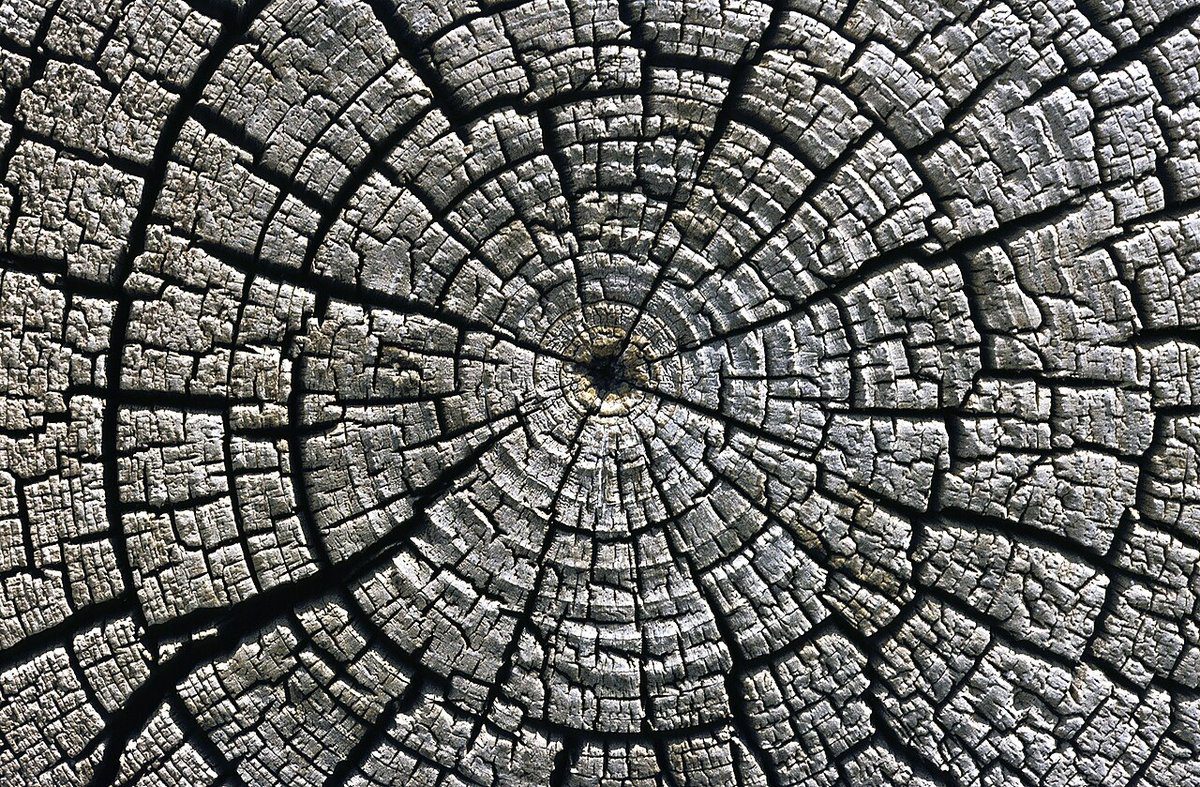
Ordinary radiocarbon dating gives a range of possible dates rather than a single year. By measuring the radiocarbon in individual rings, the team could pick out the one ring in each piece of wood that showed the sharp rise, and that ring had to be 993. Dee said the approach had only become available in the previous few years.
From there the method came down to counting rings out to the bark. Kuitems said that “finding the signal from the solar storm 29 growth rings in from the bark allowed us to conclude that the cutting activity took place in the year 1021 AD.”
Dee described the moment the three counts were compared with each other. “And it just so happened in all three cases it was exactly the same year: 1021 A.D.,” he said.
What the Norse Were Doing in 1021
The year places a Norse group at L’Anse aux Meadows in 1021, felling trees for building and for repairing their ships. Researchers estimate that up to 100 people, both women and men, lived at the site.
Birgitta Wallace, a retired Parks Canada archaeologist who worked at L’Anse aux Meadows for decades, is a co-author of the study. She has described the site as “a base for further exploration, a gateway to other sites.” Remains found at the site include butternuts and butternut wood, which do not grow in Newfoundland, so the Norse had traveled farther south, most likely to the area of present-day New Brunswick.
The date does not show when the Norse first arrived or how long they stayed, and the researchers have been careful about that limit. Dee said it was unclear whether 1021 came near the beginning or the end of the occupation, and the total number of expeditions and their length remain unknown.
Most archaeologists think the stay was short, judging by the small amount of refuse at the site and the absence of Norse burials. Wallace has said the Norse went back to Greenland after a decade or so, having concluded that it was very good land, but that there was danger there because of the Indigenous people. Dee has said the settlers were probably there for timber and other resources to take back to Greenland.
The authors set out what their result meant in the paper itself. They described 1021 as the earliest known year by which human migration had encircled the planet. Dee explained it in plain terms: “Ever since moving out of Africa through Europe and Asia and across the Americas, nobody had got across the Atlantic Ocean.”
More from Terribly Interesting
Sources
- ScienceDaily, University of Groningen release, October 20, 2021
- Science News
- Gizmodo
- Archaeology magazine, January/February 2022
- AP via NBC Washington
- Canadian Mysteries, L’Anse aux Meadows
- Scientific American, 60-Second Science
- kottke.org quoting coverage
- Miyake, Masuda and Nakamura, Nature Communications 4:1748 (2013), ADS abstract
- Medievalists.net