A clam that began growing on the seabed off northern Iceland in 1499 was still alive in 2006, when scientists froze it aboard a research ship along with about 200 others.
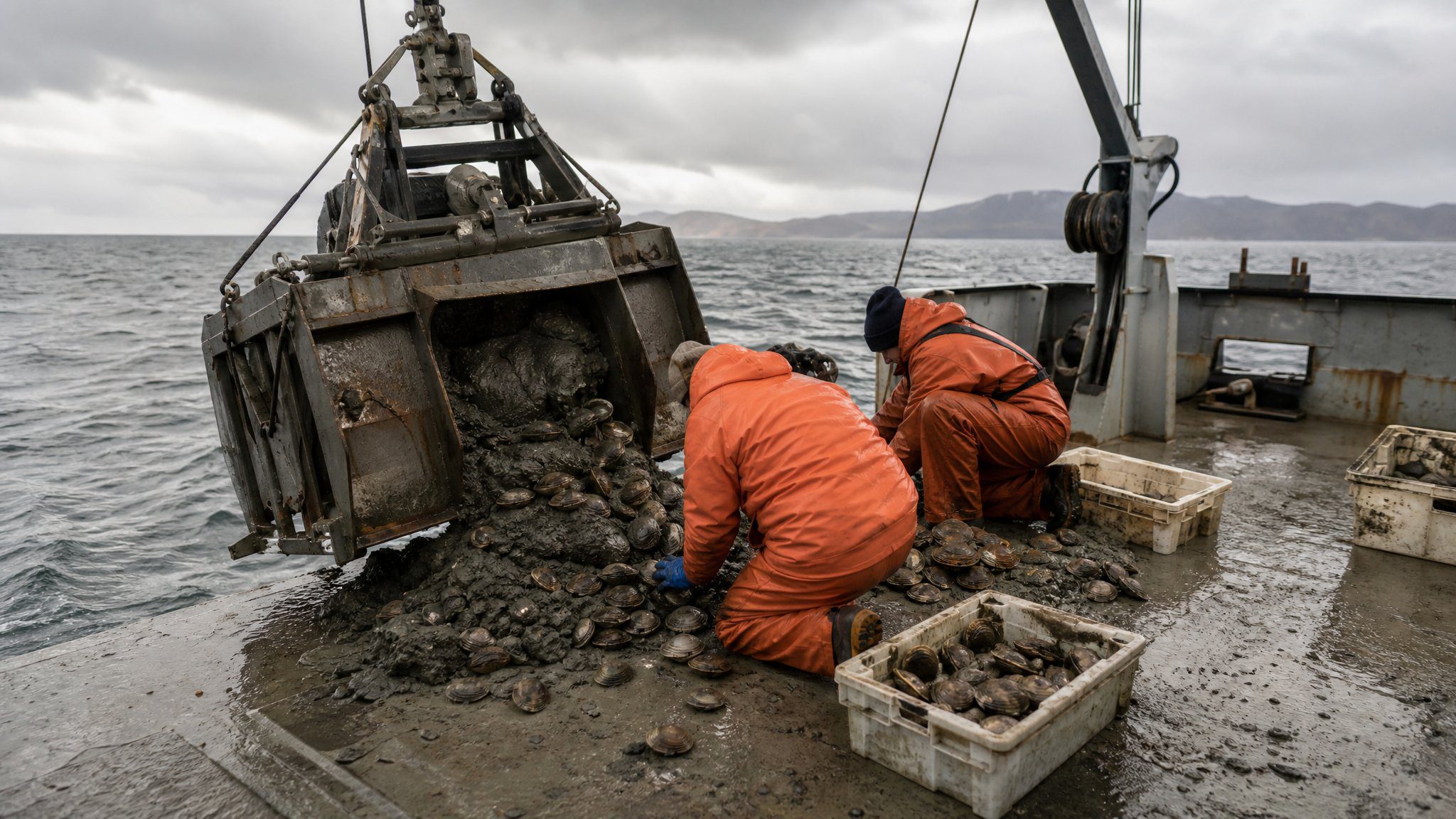
The clam was an ocean quahog, Arctica islandica, later nicknamed Ming. Marine scientists from Bangor University in Wales dredged it from about 80 meters (roughly 260 feet) of water near the island of Grímsey. No one on the cruise knew how old it was when it went into the freezer. In 2013 a detailed count of the yearly growth bands in its shell, checked against radiocarbon dates, showed that it had been 507 years old. That is the greatest accurately measured age of any individual non-colonial animal on record.
The Bangor team had first announced in 2007 that the clam was between 405 and 410 years old, and the later recount pushed its birth back by about a century. That placed its first growth band in the reign of China’s Ming dynasty, which gave the clam its nickname, and in the years when Christopher Columbus was still sailing between Spain and the Caribbean.
The clam died in routine freezing long before anyone counted its rings, and its value to science lay in what those bands recorded about five centuries of North Atlantic seawater. Guinness World Records lists it as the oldest mollusk ever recorded and the longest-lived non-colonial animal yet discovered.
A Research Cruise Off Grímsey in 2006
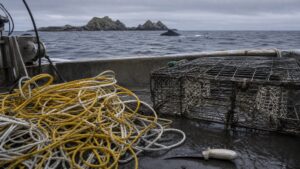
The expedition that found Ming sailed in 2006 aboard the Icelandic research vessel Bjarni Sæmundsson as part of MILLENNIUM, a European Union project studying how the climate had changed over the previous 1,000 years. Bangor researchers Paul Butler and James Scourse were dredging live ocean quahogs from the north Icelandic shelf near Grímsey, because the species adds a growth band to its shell every year.
The clams that came up alive were frozen on board so they could be taken home to the laboratory in Wales. Nothing about Ming’s appearance marked it out, because ocean quahogs grow relatively quickly while young and then add very little shell each year once they reach a certain age. A clam a few decades old and one several centuries old can look much the same from the outside. The only reliable way to tell them apart is to cut the shell open and count the bands.
The record surfaced in the laboratory, where postdoctoral scientist Al Wanamaker made the discovery while working through the shells with Butler. Chris Richardson, a senior member of the Bangor team, later recalled the moment: “Al and Paul rushed up to my office to announce that they had found a record-breaker.” Their first count comfortably beat the 220 years recorded for a quahog from American waters in 1982.
The find was made public in October 2007, at a time when a grant from the charity Help the Aged was funding Bangor research into how the species resists aging. The working theory was that a clam able to survive for centuries must have evolved unusually effective defenses against the damage that accumulates in an aging body.
How do scientists know how old Ming the clam was?
Reading a clam’s age belongs to sclerochronology, the study of annual growth increments in shells, and it works on the same principle as counting tree rings. Each year an ocean quahog adds a band of shell whose width varies with seawater temperature, salinity and the amount of food available. The bands therefore record both the passage of time and the conditions the animal lived through.
The 2007 estimate came from bands counted on a cut section through the hinge, where the two halves of the shell join. In a clam that old the most recent bands were packed so tightly that more than 500 of them sat within a few millimeters, which made an exact count close to impossible.
For the 2013 study, the researchers counted the bands again on a section through the outer margin of the shell, where the growth lines are spread farther apart. They also compared Ming’s band pattern with those of other quahogs from the same waters whose lives overlapped with its own, a technique called crossdating that was borrowed from tree-ring science. Radiocarbon dates measured at the AMS 14C Dating Centre at Aarhus University in Denmark, headed by Jan Heinemeier, provided an independent check on the count.
The paper appeared in the journal Palaeogeography, Palaeoclimatology, Palaeoecology, with Butler, Wanamaker, Scourse, Richardson and David Reynolds as its authors. Butler told reporters that the team had got the age wrong the first time and had perhaps been hasty in publishing, but that they were now certain of the figure. Marine biologist Rob Witbaard said the age had been confirmed by several methods, including carbon-14 dating, and that any remaining error could be no more than one or two years.
Read next
The Desert Cat That Never Needs To Drink Water
Reading Five Centuries of North Atlantic Seawater
The 2013 paper was at heart a climate study, and Ming was one shell among many in a chronology built from quahogs collected on the north Icelandic shelf. By matching overlapping band patterns from shell to shell, the team assembled a dated record that reached back to AD 649 and covered 1,357 years. Several of the individual animals in that record had lived for more than 300 years.
The band widths carried a strong shared environmental signal and tracked regional sea surface temperatures to a statistically significant but modest degree. That pattern suggested that the clams’ growth responded to a mix of influences beyond temperature alone. Over spans of several decades the shell record showed similarities with other climate archives from the region, especially during the shift from the Medieval Climate Anomaly into the Little Ice Age.
A follow-up study in Nature Communications in 2016, led by David Reynolds, measured oxygen isotopes in the shell bands of 21 quahogs from the same site. The result was a year-by-year record running from AD 953 to 2000. The isotopes track changes in seawater density, and for the years before 1800 the record showed shifts in the ocean arriving roughly 40 years before matching changes in air temperature. The authors concluded that solar and volcanic forcing, together with ocean circulation, were key drivers of North Atlantic climate over the last millennium.
Butler has described the species as a year-by-year timeline of ocean temperature, and the shells extend that timeline far beyond the period covered by instrument measurements at sea.
Why Ocean Quahogs Live for Centuries
One habit that may help them last is burrowing into the sediment and closing the shell for between one and seven days, during which the clam’s tissues sit in water with little or no oxygen. In the laboratory, quahogs in this state cut their metabolism to about 10 percent of normal, and to around 1 percent during longer spells without oxygen.
Studies of the species have also found strong resistance to oxidative stress, one of the main sources of cellular damage linked to aging. A 2015 comparison found that the proteins of long-lived Icelandic quahogs held their shape under stress better than those of clams from the Baltic Sea. In the Baltic the animals face large swings in temperature and oxygen, and they live about 36 years at most.
Accusations of Clam Murder
When the revised age was announced in November 2013, headlines around the world reported that scientists had killed the oldest animal ever found, and the backlash reached the Bangor team directly. Scourse said the researchers had received emails accusing them of being clam murderers.
The team pointed out that the same species is harvested commercially in large numbers for clam chowder, so a diner could unknowingly eat a quahog several centuries old. Scourse also stressed that the cruise had sampled only a tiny fraction of the population, which made the chance that Ming was the oldest quahog alive in 2006 vanishingly small.
Ming’s shell is now on display in the Insight gallery at National Museum Cardiff, among exhibits on research into the natural world. The museum ranks the Greenland shark, at roughly 400 years, as the second oldest animal on record behind it.
The unofficial record that Ming broke had belonged to a quahog collected alive off Iceland in July 1868 and kept in a museum collection. When researchers counted its 374 bands in 2005, they found that its shell had started growing in the fall of 1494, five years before Ming’s own first band.
More from Terribly Interesting
Sources
- Guinness World Records
- ScienceDaily (Bangor University release, 2007)
- National Geographic
- ScienceBlog
- Reynolds et al. 2016, Nature Communications (PMC)
- Christian Science Monitor
- ScienceNordic
- Butler et al. 2013 abstract, PANGAEA
- Museum Wales
- Encyclopaedia Britannica
- Encyclopaedia Britannica
- Bangor University research portal
- Yahoo News / AOL
- PLOS One / PMC
- Gruber et al. 2015, PMC
- IFLScience
- ScienceDirect abstract