In January 2025, Czech conservation officials found that a family of eight beavers had dammed the old army drainage channel they had spent seven years trying to get permission to block themselves.
The site is in the Brdy Protected Landscape Area, a former military training ground in the hills south of Prague. Since 2018 the area’s administrators had planned to build small dams there to turn a drained stretch of land back into wetland. The dams were also meant to stop sediment and acidic water from nearby ponds running into the Klabava River. The project had funding of about 30 million Czech koruna, roughly $1.2 million, but it had stalled over building permits and a dispute about who owned the land.
The beavers built at least four dams in the places the plans had marked, and water began spreading back across the drained ground. The Czech Nature Conservation Agency, which manages the area, said the animals had saved the state the whole cost of the project, and it decided to leave them to maintain the site.
A Drained Wetland on a Former Army Range
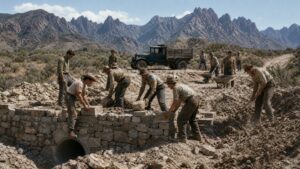
For decades the Brdy hills were a military district closed to the public, used by the army for training. Soldiers dug bypass gullies across part of the area to drain water off the land, and the wet ground dried out. The drainage channels also changed how water reached the Klabava, carrying sediment and acidic water from ponds upstream into the river.
The military district was abolished, and in 2016 the Brdy Protected Landscape Area was created in its place. Its administrators identified the drainage gullies as a problem for the landscape and for the river, where the endangered stone crayfish lives. In 2018 they drafted a plan for a series of small dams that would slow the water, hold it on the land, and let the sediment settle before it reached the Klabava.
The plan then became caught in talks between two state bodies over who owned the land. Bohumil Fišer, head of the Brdy Protected Landscape Area administration, told Radio Prague International that “the Military Forest Management and the Vltava River Basin were negotiating with each other to set up the project.” The administrators also needed building permits for the dams, and those had not been issued when the beavers arrived.
The Dams That Appeared in January
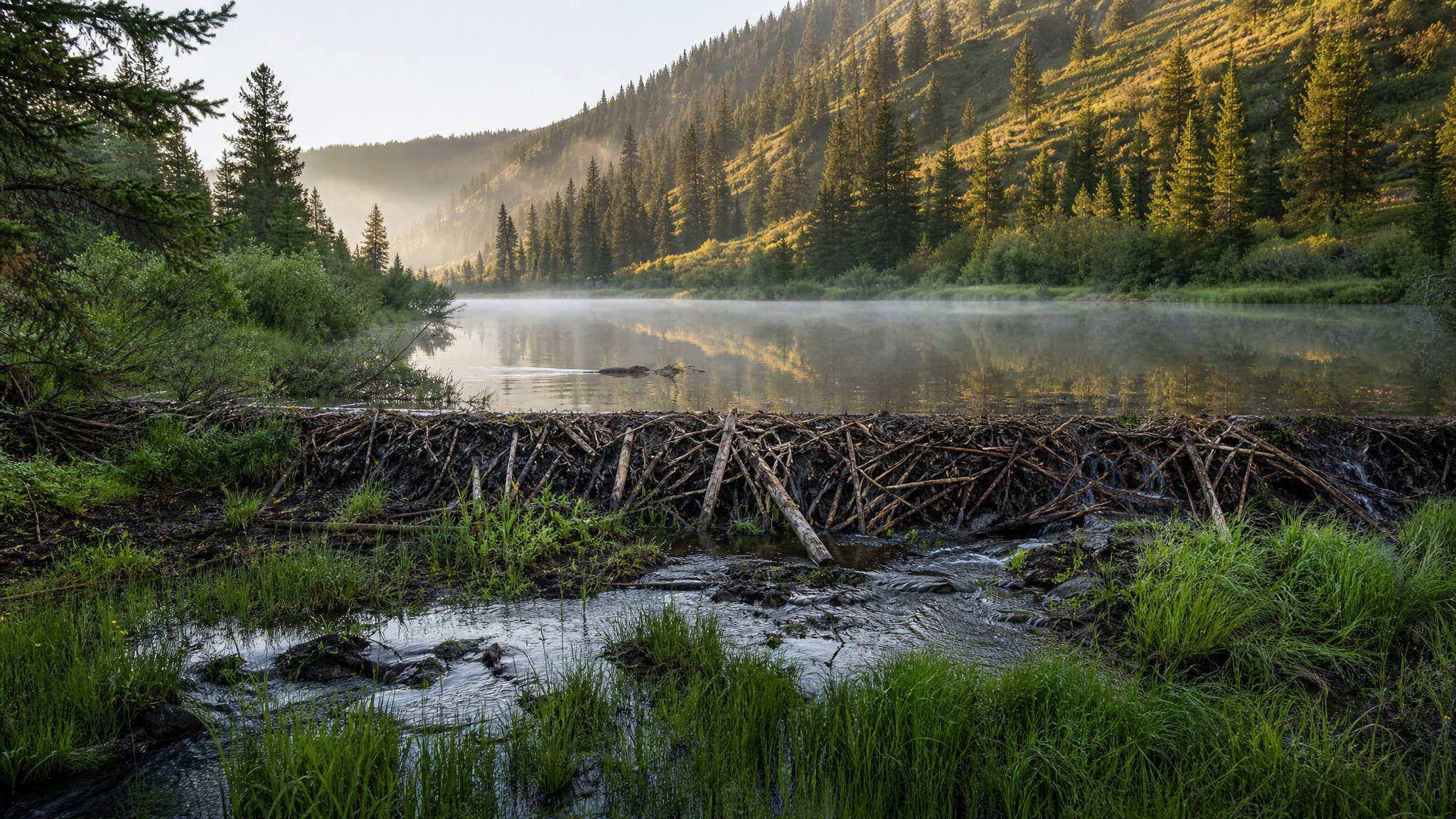
Staff from the protected area found the beaver dams in January 2025, built on the bypass gully that soldiers had dug to drain the former base. The water that had been running off the site began to spread across it again. “The beavers beat them to it, saving us CZK 30 million,” Fišer said. “They built the dams without any project documentation and for free.” He told Radio Prague International, which first reported the story, that a small pond and the surrounding wetland could already be seen forming.
Fišer later told the news agency AFP that the beavers had built a wetland of pools and canals covering roughly twice the area his office had drawn up in its plans.
“Beavers always know best,” said Jaroslav Obermajer, head of the Central Bohemian office of the Czech Nature and Landscape Protection Agency. “The places where they build dams are always chosen just right, better than when we design it on paper.”
How fast the beavers worked is less certain than the official accounts suggested. Officials described the work as done practically overnight, and the Czech zoologist Jiří Vlček said a beaver can build a dam in one night, or two at most. People, he added, have to get permits, get the project approved and find the money. Gerhard Schwab, who manages beavers for the southern part of Bavaria in Germany, told National Geographic that beavers can flood an area overnight but that building a true dam takes a few weeks. “I could as well believe that the pyramids were built in one week,” he said, and suggested that nobody had noticed the work until it was finished.
Beavers build dams from wood, mud and stones to create ponds that protect them from predators and keep their food within reach, and the ponds fill with insects, fish and amphibians. Ecologists who inspected the Brdy dams said they would provide good conditions for the stone crayfish, frogs and other wetland species and would improve water quality. The Czech Republic now has an estimated 15,000 beavers, and farmers elsewhere complain about them felling trees and flooding fields, but there is no farmland near the Brdy site. “We don’t expect any conflict with the beaver in the next 10 years,” Fišer said.
The science journalist Ben Goldfarb, author of the book Eager: The Surprising, Secret Life of Beavers and Why They Matter, gave the Czech authorities credit for how they responded. “Instead of saying, ‘That wasn’t what we planned originally,’ they recognized that these animals are filling that ecological function very well and said, ‘We’re going to let them keep doing it,'” he told National Geographic.
Read next
The Man Who Refused $50 Million for His Island
The Devon Beavers That Trapped 100 Tonnes of Soil
The clearest measurement of how much dirt a beaver dam can hold comes from England. Since 2011 a single family of beavers has lived in a fenced 2.5-hectare enclosure at an undisclosed site in West Devon, run by the Devon Wildlife Trust. The beavers built 13 dams along what had been a small stream, turning it into a chain of deep ponds, and since 2015 the trust has also studied a wild-living beaver population on the River Otter in East Devon.
Scientists from the University of Exeter, led by the hydrologist Richard Brazier, measured sediment, nitrogen and phosphorus in the water entering and leaving the site and in the mud trapped behind each dam. They found that the dams held more than 100 tonnes of sediment, 70 percent of it soil washed off intensively farmed grassland upstream. The sediment carried high concentrations of nitrogen and phosphorus, nutrients that harm river wildlife and have to be removed from drinking water.
“It is of serious concern that we observe such high rates of soil loss from agricultural land, which are well in excess of soil formation rates,” Brazier said when the study was published in 2018. He added that beaver dams could go a long way to reducing that loss and trapping the pollutants that degrade rivers and lakes.
Engineers Versus Beavers in Oregon
A closer test of what a beaver dam does to pollution took place in Gresham, Oregon, east of Portland. In 2009 the city built the Columbia Slough Regional Water Quality Facility, a 13-acre engineered wetland that treats stormwater from 880 acres of mostly industrial land. In 2014 beavers moved in and built a network of dams across the facility’s engineered terraces and berms. The dams changed how long the water stayed in the wetland, the path it took and the plants that grew there.
The city left the dams in place and studied them. Pollutant removal was greater with the beaver dams than without them, and heavy metals, which are regulated pollutants in the slough, were removed twice as efficiently when the dams were there.
The researchers linked the improvement to two effects they watched during storms. The dams slowed the water down so that sediment, and the pollutants attached to it, dropped out, and the water also filtered through the mud, sticks and vegetation of the dams themselves. That is the same mechanism the Brdy administrators had wanted from their planned dams on the gully leading to the Klabava. The Gresham team concluded that beavers can turn up and alter engineered designs, and that meeting water quality goals does not always require keeping a facility in its as-built condition.