In 1977 a Los Angeles fish merchant named Lee Lantz looked over an oily, unwanted fish on the docks of Valparaiso, Chile, and decided that its biggest problem was its name.
Lee Lantz, an American fish wholesaler who traveled to foreign ports looking for new products, gave the Patagonian toothfish the name Chilean sea bass after finding it in Valparaiso in 1977. The fish is not a true bass, and much of the later catch came from the waters around Antarctica. Under its new name it moved from frozen fish sticks to the menus of expensive American restaurants, and the demand it created sent illegal fishing boats deep into the Southern Ocean.
The toothfish lives in deep, cold water, grows slowly and lives a long time, which made it slow to replace once boats began catching it in large numbers. By the early 2000s chefs, navies and conservation groups were all trying to slow a trade that had started with a new label on an unwanted fish.
The fish and its new name
| Renamed | 1977, in Valparaiso, Chile |
|---|---|
| Renamed by | Lee Lantz, Los Angeles fish merchant |
| Original name | Patagonian toothfish |
| First big buyer | A fish stick maker, in 1980 |
| FDA market name | Accepted in 1994 |
| Menu price | $47 a fillet in 2019 |
A Fish Nobody in Valparaiso Wanted
Lantz was close to giving up on his 1977 trip when he came across the fish in Valparaiso, the largest port in Chile. It was a big gray-black fish with an undershot jaw and needle-sharp teeth. The local fleet caught it only incidentally, since buyers considered it too oily to be worth selling.
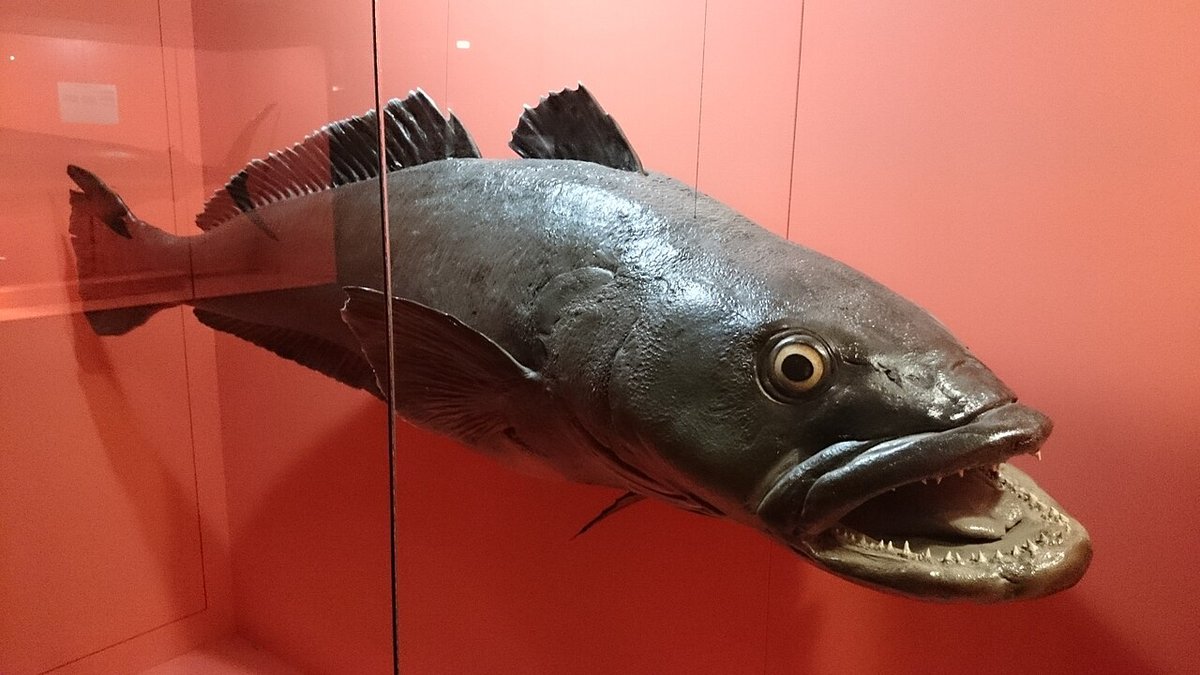
Chilean fishermen called it bacalao de profundidad, which means cod of the deep, and nobody on the dock could tell Lantz much more about it. In English the species already had a name, Patagonian toothfish, and that name was unappetizing enough to sink it in an American fish market.
He fried a piece and found that it had almost no flavor, although he liked its white flesh, its firm texture and its buttery fat content. He expected that mild taste and firm texture to suit American diners, as long as the fish reached them under a name they wanted to order.
Read next
The April Fools’ Volcano That Fooled an Alaskan Town
Choosing the Name Chilean Sea Bass
Lantz considered Pacific sea bass and South American sea bass before rejecting both as too vague. The journalist G. Bruce Knecht told the story in a 2006 book about the fish, and he wrote that those names were “so geographically imprecise that they sounded almost generic.” Lantz settled on Chilean sea bass because it sounded more exclusive, and the white, large-flaked flesh looked enough like bass to carry the label.
Sales of the renamed fish started slowly, and his first big buyer came in 1980, when a company making frozen fish sticks bought his entire stock as a cheaper stand-in for halibut, whose price had been rising. Cantonese restaurants in the United States then began buying it as a substitute for black cod, and from there it reached chefs at the top of the trade.
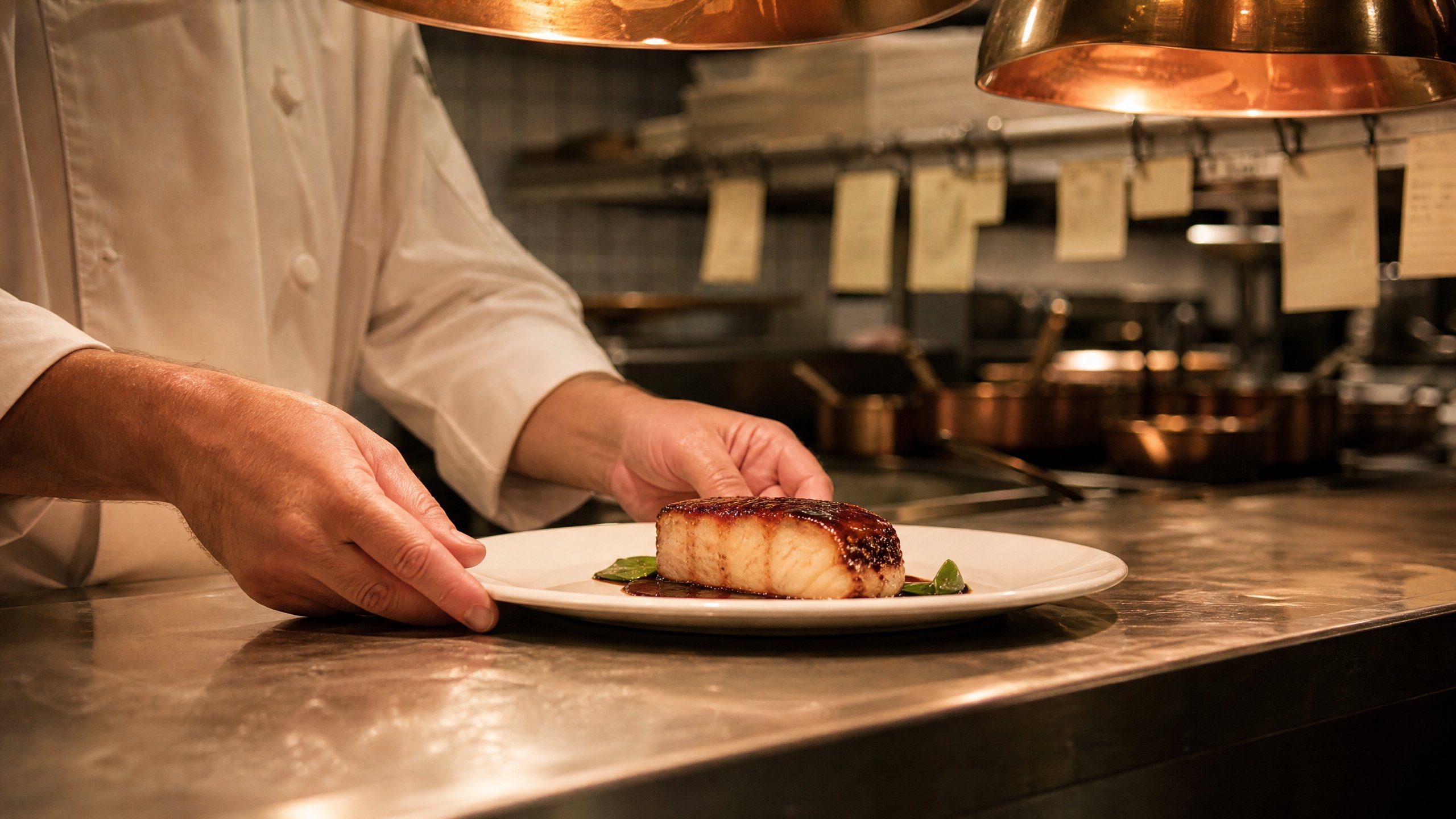
The Four Seasons first served it in 1990, and through that decade it became a fixture at Nobu and Tao. Chefs paired it with miso glaze, red curry or black bean paste. Rick Moonen, the chef at Oceana in New York, made it his signature dish and described it as “like cod on steroids.”
Most of the fish reaching American kitchens arrived frozen, which suited it well. The seafood distributor Louis Rozzo said it was “one of the only fish that thaws out and eats better than a fresh fish.” In 1994 the Food and Drug Administration accepted Chilean sea bass as an alternative market name for the Patagonian toothfish, and in 2001 Bon Appetit named it dish of the year.
Poachers in the Southern Ocean
As American demand grew through the 1980s, industrial fleets fished down the toothfish stocks off Chile and Argentina. In the 1990s boats moved south to fish illegally around remote islands such as South Georgia, Kerguelen and the Prince Edward Islands. A slow-growing, long-lived fish had little chance of keeping pace with that catch.
The money explained the risk, because a single pirate ship could take 300 tons of toothfish in a short season, worth $4 million to $6 million. The United States ate about half of the catch, and in Asia, where about 40 percent was sold, the same fish went by another invented name, snowfish.
In February 2002 the National Environmental Trust, a Washington conservation group, estimated that nearly 80 percent of the Chilean sea bass on the world market had been caught illegally. Its spokesman, Eric Rardin, said that “for every ton legally caught of Chilean sea bass there are 5 or 6 tons caught illegally.” A US Commerce Department estimate the same year put about two-thirds of sales in the illegal category.
Australia was one of the countries that sent patrol boats after the poachers. In 2003 the Australian vessel Southern Supporter chased the Viarsa, a toothfish longliner, for about 4,000 miles over three weeks.
Chefs Take a Pass on Chilean Sea Bass
In the same week as the National Environmental Trust report, more than 60 San Francisco Bay Area restaurants signed on to a boycott called Take a Pass on Chilean Sea Bass. They included Chez Panisse in Berkeley and the French Laundry in Yountville. Zeke Grader, who led the Pacific Coast Federation of Fishermen’s Associations, warned that “soon there won’t be any left to catch” unless the fish was allowed to recover.
The campaign kept the fish off many restaurant menus and seafood counters across the United States. Allen Vitti, chef de cuisine at Fringale in San Francisco, which had served the fish from time to time, put the chefs’ view simply: “There are plenty of other fish in the sea.” Moonen took it off the menu at Oceana, and he later said it “took me a week to get them off their Chilean sea bass addiction.”
The legal fishery changed in the years that followed, as navies chased most of the poachers away from the islands and catch limits were set. In March 2004 the Marine Stewardship Council certified the toothfish longline fishery around South Georgia as sustainable.
The name Lantz chose on the Valparaiso docks is still the one printed on American menus. In 2019 the Water Grill in Los Angeles, the city where he had run his business, charged $47 for a fillet of Chilean sea bass, the most expensive fish it served.