Every June, four Quechua communities in the Peruvian Andes let their bridge over the Apurimac River drop into the gorge and weave a new one from grass by hand.
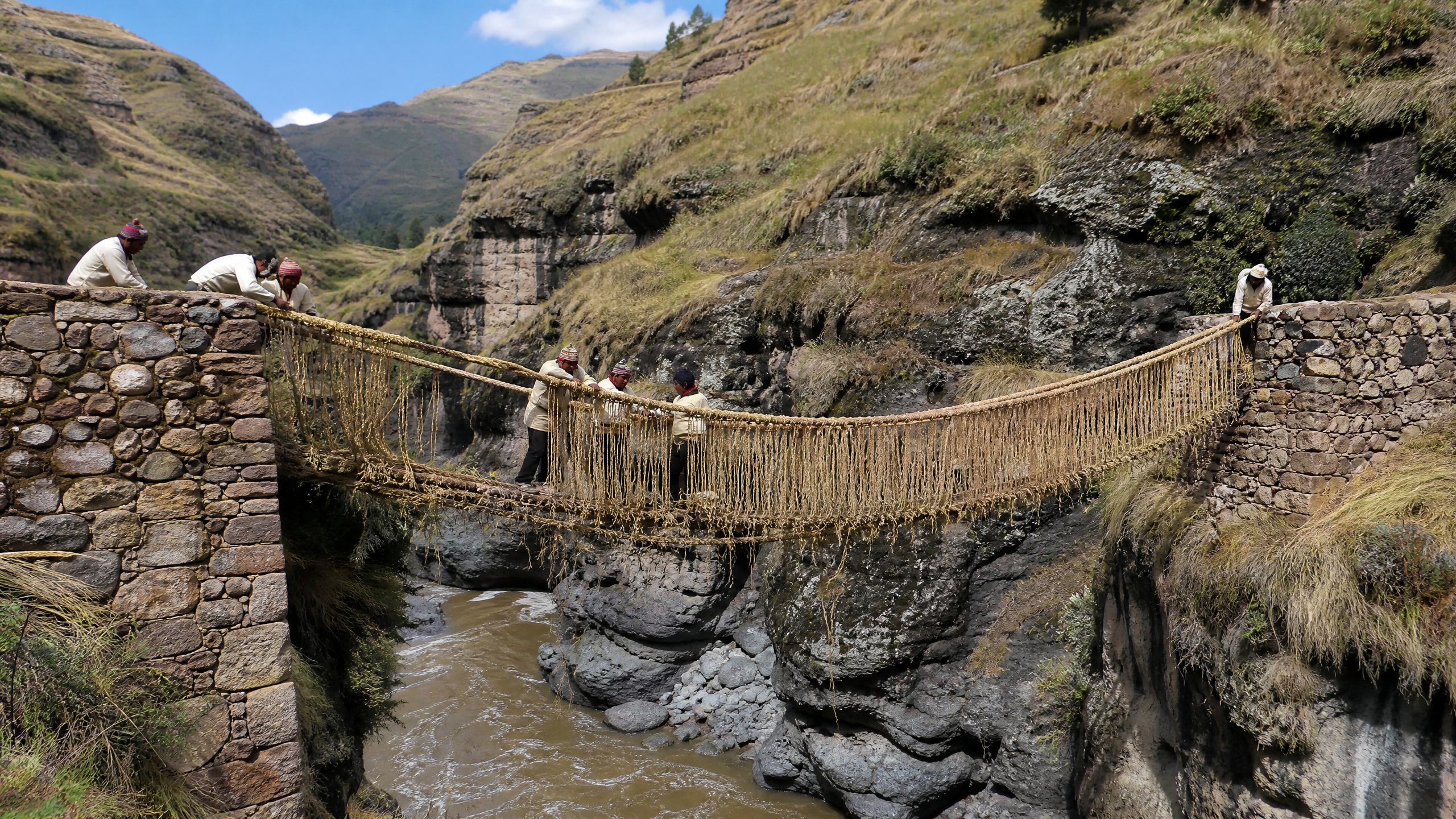
The Q’eswachaka bridge spans a gorge of the Apurimac River in the province of Canas, in the Cusco region of southern Peru. It is a suspension bridge about 28 meters long, made entirely of ropes twisted from a tough highland grass, and the communities of Huinchiri, Chaupibanda, Choccayhua and Ccollana Quehue renew it every year using Inca techniques. In 2013 UNESCO added the knowledge, skills and rituals of that renewal to its Representative List of the Intangible Cultural Heritage of Humanity.
The bridge is the last of its kind, a survivor from the Inca road network known as the Qhapaq Nan, and the communities treat it as a sacred link with nature, tradition and their own history. The rebuild takes three days of work in the second week of June, followed by a day of music and dancing when the new bridge opens.
The bridge at a glance
| Length | About 28 meters |
|---|---|
| Width | About 1.2 meters |
| Cables | Six: four for the floor, two handrails |
| Rebuilt by | Four Quechua communities |
| UNESCO listing | 2013 |
| Collapses | March 2021 and May 17, 2025 |
Grass Rope From Every Household
The material is q’oya ichu, a hard-wearing straw that grows high in the Andes and is gathered at altitudes of more than 13,000 feet. Collecting it and stretching it starts at the end of May, weeks before the communities meet at the gorge.
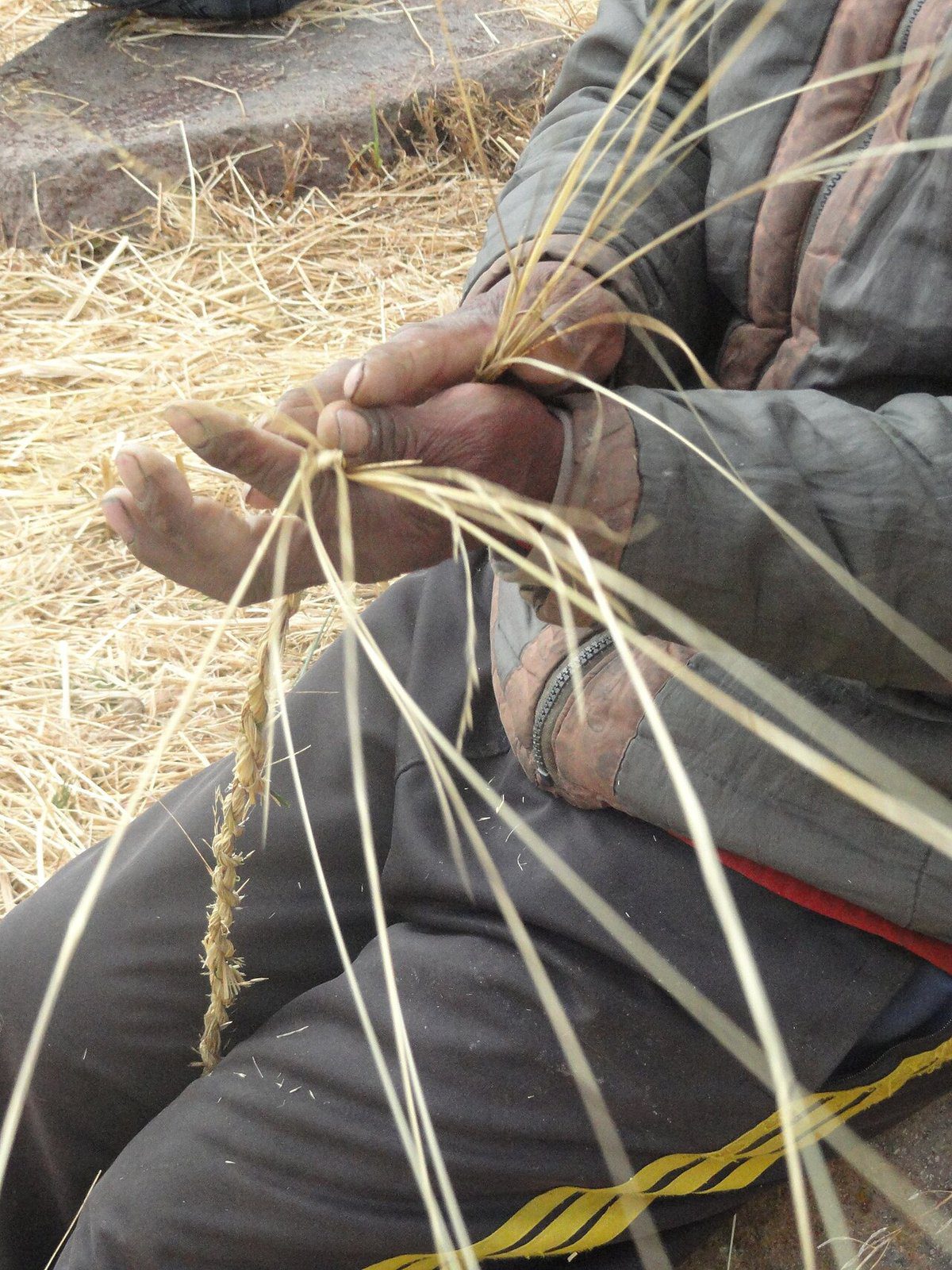
The first ropes are made at home, long before anyone reaches the gorge. Families, mostly the women and children, twist the straw into thin cords about 70 meters long, and each household brings its share to the bridge masters on the first day of the renewal.
At the site, two bridge builders guide the twisting of those cords into medium-sized ropes, which are then braided together into six large cables. Four of the cables form the floor of the bridge, and the other two become its handrails.
Read next
The Statue of Liberty Arrived in 214 Crates With No Pedestal Ready
Three Days at the Gorge
The renewal opens with a ritual payment to the protector Apu, the mountain spirit Quinsallallawi, before any work is done on the bridge. The same day the grass is collected and twisted, and by the afternoon the thin strands have become thick ropes.
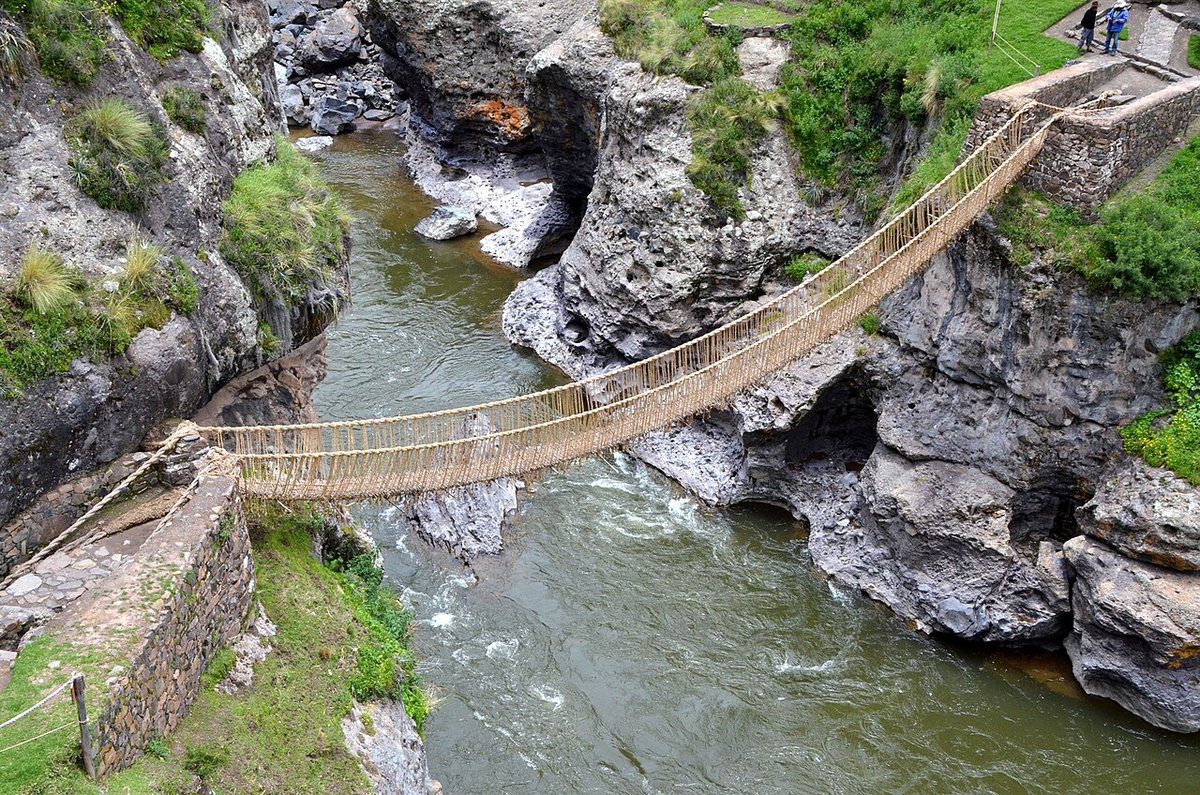
On the second day the men stretch the main cables across the river and tie them tightly to the ancient stone bases on each bank of the river. The ropes of the old bridge are cut loose and fall into the river below.
On the third day the weaving begins from both ends at once. Two weaving masters work in from opposite banks, lashing the handrails to the floor cables until the two halves meet in the middle, and the floor is covered with a carpet of branches.
When the work is finished the communities open the new bridge with food, traditional music and dances. The bridge is about 1.2 meters wide, and from that day it carries everyone who crosses the gorge until the following June.
The Last Inca Bridge Master
The man who leads the rebuild is Victoriano Arizapana Huayhua, a chakakamayoq, or bridge building specialist, from Huinchiri. He organizes the work each year in the second week of June, and he says he leads it as the heir to that knowledge from his grandfather and father, and that he kept it when his father died.
Arizapana says the Andean deities hold that the knowledge of the bridge should pass to one bloodline only. The bridge also has its own rules for anyone who uses it. People make a payment or leave an offering and ask permission before they cross it or touch it, and men from Huinchiri burn an offering to show their respect.
The communities trace the bridge to their Inca ancestors, who used it to cross the Apurimac and to trade, and they put its age at more than 500 years.
The Year the Bridge Fell
The yearly renewal is what keeps the bridge standing, and in 2020 it did not happen, because the COVID-19 pandemic stopped the communities from gathering. The old bridge went a year without being strengthened, and in March 2021 it collapsed into the river.
Jean Paul Benavente, the governor of Cusco, linked the collapse directly to the missed renewal, saying the pandemic had left the bridge without its yearly strengthening.
In June 2021 the people of Huinchiri and the neighboring communities rebuilt it, starting from both sides of the river and working toward the center. Benavente described the new bridge as an answer to the pandemic and a sign that the region could show the world it was recovering.
The bridge came down again in the early morning of May 17, 2025, after what Peru’s culture authorities called a serious attack, and complaints were filed with the public prosecutor’s office. The Cusco culture directorate warned that the damage put at risk the bridge’s continuity as a living practice as well as its physical structure.
The four communities, with the support of the Quehue district council, rebuilt it from ichu grass using the same methods. They handed over the new Q’eswachaka on Saturday, June 7, 2025, with traditional music and dancing, three weeks after it had fallen into the Apurimac.